


.tmedium.png)
Cinema in Barcelona
A city that cinema keeps choosing
That capacity to absorb different stories without losing its own is what distinguishes Barcelona as a film city.
What makes Barcelona one of Europe's great film cities? Which locations in the Gothic Quarter have appeared on screen? Which directors keep returning, and why?
Its relationship with cinema is not incidental — it is structural. The Gothic Quarter has served as Paris, as New York, as the eighteenth century and the near future, without ever ceasing to be itself. Woody Allen, Pedro Almodóvar, Tom Tykwer, Alejandro González Iñárritu: four directors with nothing in common except the decision to film here. The city gave each of them something no studio could replicate.
— Barcelona does not only appear in films. It generates them. —
Cinema in Barcelona
A city that cinema keeps choosing
That capacity to absorb different stories without losing its own is what distinguishes Barcelona as a film city.
What makes Barcelona one of Europe's great film cities? Which locations in the Gothic Quarter have appeared on screen? Which directors keep returning, and why?
Its relationship with cinema is not incidental — it is structural. The Gothic Quarter has served as Paris, as New York, as the eighteenth century and the near future, without ever ceasing to be itself. Woody Allen, Pedro Almodóvar, Tom Tykwer, Alejandro González Iñárritu: four directors with nothing in common except the decision to film here. The city gave each of them something no studio could replicate.
— Barcelona does not only appear in films. It generates them. —
I. The stone that works for every century
The Gothic Quarter has appeared in films set in Paris, New York, the eighteenth century, and the near future. It works as all of them because its layers carry enough ambiguity: Roman foundations, medieval walls, modernist reinventions, and contemporary life pressing against all of it at once. When Tom Tykwer needed pre-revolutionary Paris for Perfume: The Story of a Murderer (2006), he came here — to the Barri Gòtic and the Plaça de Sant Felip Neri, two minutes from this hotel — and found exactly what he needed. The century was different. The stone was the same.
The Gothic Quarter, where Lamaro stands, has appeared in films set in Paris, New York, the eighteenth century, and the near future. It works as all of them because its layers of stone carry enough ambiguity: Roman foundations, medieval walls, modernist reinventions, and contemporary life pressing against all of it at once. When Tom Tykwer needed the streets of pre-revolutionary Paris for Perfume: The Story of a Murderer (2006), he came here — to the Barri Gòtic and the Plaça de Sant Felip Neri, two minutes from this hotel — and found exactly what he needed. The century was different. The stone was the same.
— Three directors. Three radically different films. The same city. That range is the argument. —
II. The city as set — and as subject
Woody Allen chose Barcelona over Paris for Vicky Cristina Barcelona (2008) because he wanted a city that was already a character. The result was a film where Barcelona is not decoration but argument: the light, the architecture, the pace of the streets are as central to what happens as the script. Allen filmed in the Barri Gòtic, in the Palau de la Música, in Gaudí's Park Güell. Barcelona played itself.
Pedro Almodóvar made a different choice with All About My Mother (1999). He used Barcelona as a place of transformation — the city where a character arrives carrying grief and leaves carrying something new. The Palau de la Música appears in one of the film's most charged sequences. The opera is real. The emotion is real. The city made both possible.
Alejandro González Iñárritu used Barcelona without the postcard. In Biutiful (2010), the city is the Raval and the periphery — a place of economic pressure, migration, and ordinary life lived at the edge. It was the first major international production to film Barcelona's underbelly as its subject, not as its setting.
III. The Plaça de Sant Felip Neri
Two minutes from Lamaro, there is a small square most visitors miss. The Plaça de Sant Felip Neri appears in Vicky Cristina Barcelona and in Perfume. It also carries marks from the Civil War: pockmarks on the church façade left by shrapnel in 1938, when a bomb fell on children who had taken shelter there. The square holds both — cinema and history — without distinguishing between them. That is the kind of detail that makes a city worth filming.
— Cinema found here what it cannot build on a set: the weight of real time. —
IV. Where cinema lives year-round in Barcelona
Beyond festivals, Barcelona maintains a permanent infrastructure for serious film that very few cities of its size can match.
Filmoteca de Catalunya (Plaça de Salvador Seguí, 1–9, El Raval) is the city's institutional film archive and repertory cinema. Opened in its current building — designed by Josep Lluís Mateo — in 2012, it programmes thematic cycles, retrospectives, and author screenings throughout the year. Its collection holds over 40,000 titles. What it offers is not entertainment programming but a sustained argument about the history and meaning of cinema — the kind of argument no streaming platform can make.
Cines Verdi (Carrer de Verdi, 32, Gràcia) turn one hundred years old in 2026. They are the oldest continuously operating independent cinema in Barcelona. For a century, they have screened original-version films — first as an anomaly, then as a tradition, now as a reference point. The Verdi represents the idea that cinema is a neighbourhood institution, not a cultural event. It is open every week of the year, without exception.
Cine Texas (Carrer de Bailèn, 205, Eixample) maintains the tradition of the neighbourhood cinema with genuine curatorial judgment. It shows titles that would otherwise disappear into digital oblivion without ever appearing on a proper screen. For cinephiles who know it exists, it is a reliable find.
— These four spaces make Barcelona a city where cinema is not an occasional occasion. It is part of the daily landscape. —
V. Lamaro and cinema: the square that appears in the films
This hotel is not near the history of Barcelona's cinema. It is adjacent to one of its most filmed locations.
The Plaça de Sant Felip Neri — two minutes from the front door — is one of the most recognisable squares in the Barri Gòtic precisely because it has appeared in so many films. Its silence, its stone fountain, its façade marked by history: all of it was already here before the cameras arrived. The cameras came because it was already this way.
For guests with a direct booking, the Lamaro team can suggest film location walks through the Gothic Quarter, recommend screenings at the Filmoteca or Cines Verdi, and assist with access to festival events during the relevant periods of the year.
— Some cities become sets. Barcelona was already a story. —
What's on in 2026
BCN Film Fest — 10th Edition
16–24 April 2026 · Cines Verdi, Gràcia · bcnfilmfest.com
The BCN Film Fest defines itself around a specific argument: cinema in dialogue with literature and history. It is a festival for films that ask something of their audience. The tenth edition — which coincides with the Verdi centenary — brings Willem Dafoe, Fatih Akin, Gael García Bernal, Vicky Krieps and Diane Kruger to Barcelona. Its retrospective revisits the hundred most significant films shown at the Verdi across a century of programming.
DocsBarcelona — 29th Edition
7–17 May 2026 · CCCB, Filmoteca de Catalunya, Cines Renoir, Espai Texas · docsbarcelona.com
The leading documentary film festival in southern Europe. Twenty-nine editions in, DocsBarcelona has built a reputation as the most reliable radar for non-fiction cinema on the continent. The 2026 Docs d'Honor goes to Scottish-Irish filmmaker Mark Cousins — director of The Story of Film: An Odyssey — who will present the first chapter of his new series and offer a public masterclass. The festival extends across five venues, which means following the programme becomes a form of moving through the city.
Festival de Sitges — 59th Edition
8–18 October 2026 · Sitges, 35 km from Barcelona · sitgesfilmfestival.com
The oldest and most important fantasy and horror film festival in the world. Fifty-nine editions. From David Lynch to Tilda Swinton, Sitges has given serious institutional treatment to genre cinema since 1967 — long before that was considered a legitimate position. Its short film and animation prizes qualify automatically for Academy Award consideration. From Barcelona, Sitges is a straightforward day trip by taxi or train: the city as base, the festival as destination.
— Some festivals happen in a city. Sitges happens to a city. —
IN-EDIT Barcelona — Music Documentary Film Festival
29 October–8 November 2026 · Mooby Aribau Cinemes · es.in-edit.org
Music documentaries offer a way to understand a city through its scenes, meeting places and collective memory. IN-EDIT connects cinema and music through stories of artists, scenes and communities that also offer insight into a city’s cultural identity.
In the 2026 edition, the Sons de Barcelona section brings this perspective closer to Barcelona’s own music scene, with titles such as 23 Robadors and Els concerts de la Transició. An invitation to discover Barcelona through its sounds and the people who keep them alive.
Check the official programme for films, screening times and languages.
Sala Montjuïc
July–August 2026 · Moat of the Castell de Montjuïc · salamontjuic.cat
Every summer since 2001, the moat of the Castell de Montjuïc becomes an open-air cinema. Films are screened after dark against one of the most dramatic backdrops in Barcelona: stone walls, the city lights below, the harbour in the distance. The programme mixes classics, cult films and contemporary releases — always in original version with subtitles. Tickets are required and sell out quickly for the most popular sessions.
Cinema Lliure a la Platja
August 2026 · Platja de la Barceloneta · barcelona.cat
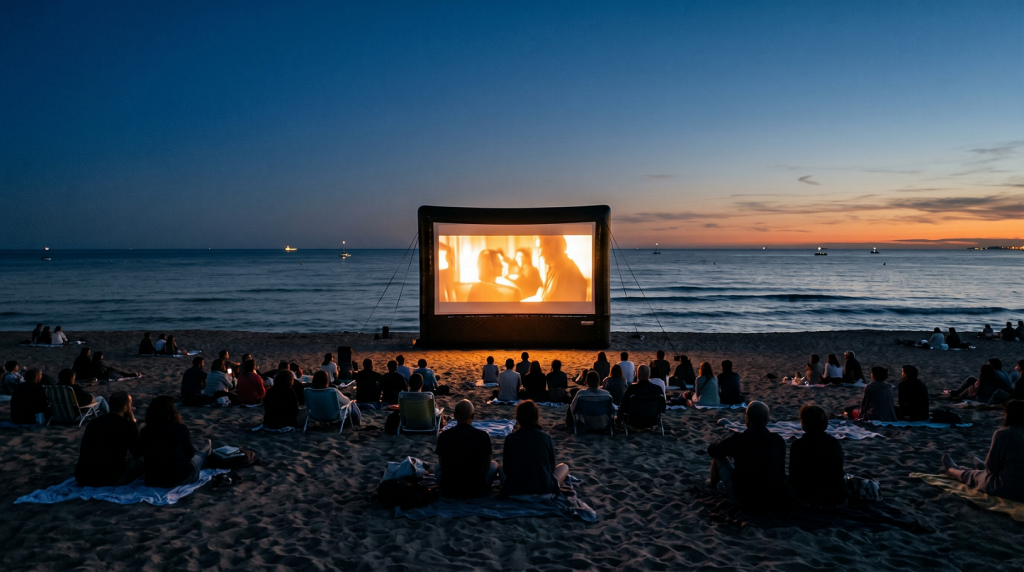
Every August, the Barceloneta beach becomes a free outdoor cinema. A large inflatable screen faces the sea; the audience sits on the sand. The programme is curated by the Institut de Cultura de Barcelona and includes films from the international circuit alongside Catalan and Spanish productions. Free entry. No reservation required.
Calendar: Cinema in Barcelona 2026
Some dates are approximate. Please confirm with each venue before your visit.
Book with us with benefits
-

Best price guaranteed
-

Cancellation insurance included in non-refundable rates.
-

Early check-in / Late check-out
(subject to availability) -

Free parking
-

Complimentary first minibar refill
Your starting point for cinematic Barcelona
- With terrace or balcony
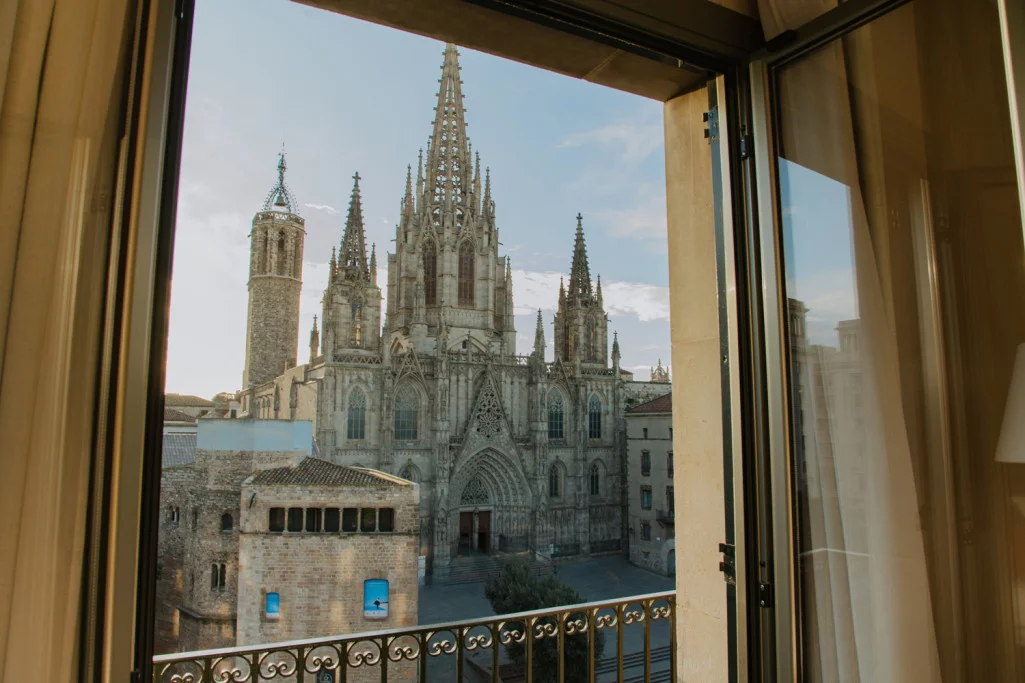
- Views of the cathedral
- Suites
- Triples and Family (Quad)

Premium Suite
1 or 2 guests · views · balcony
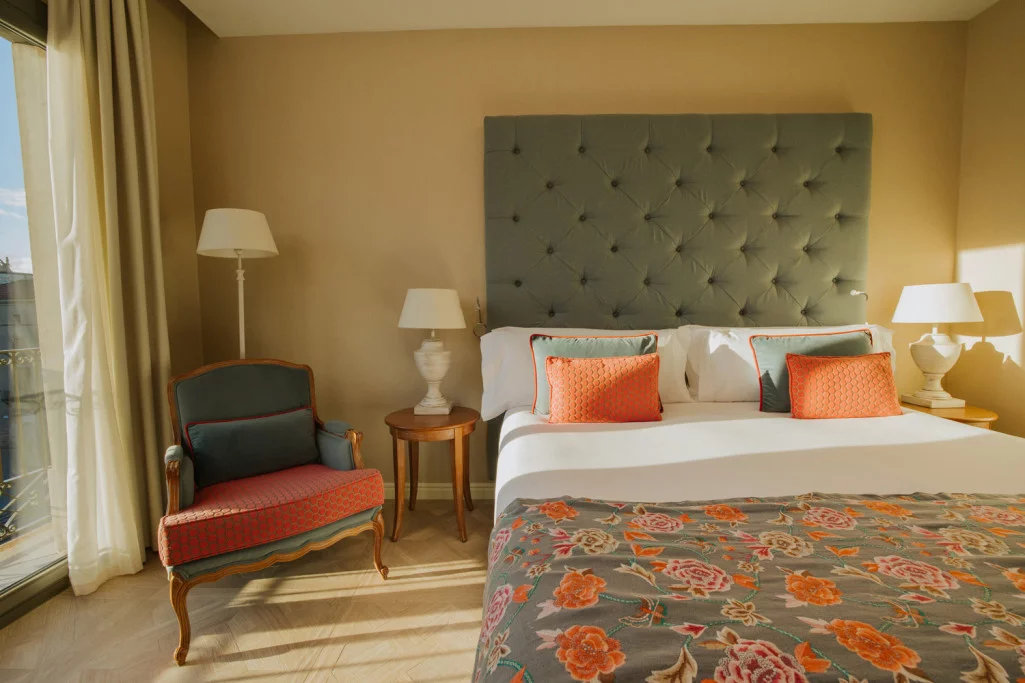
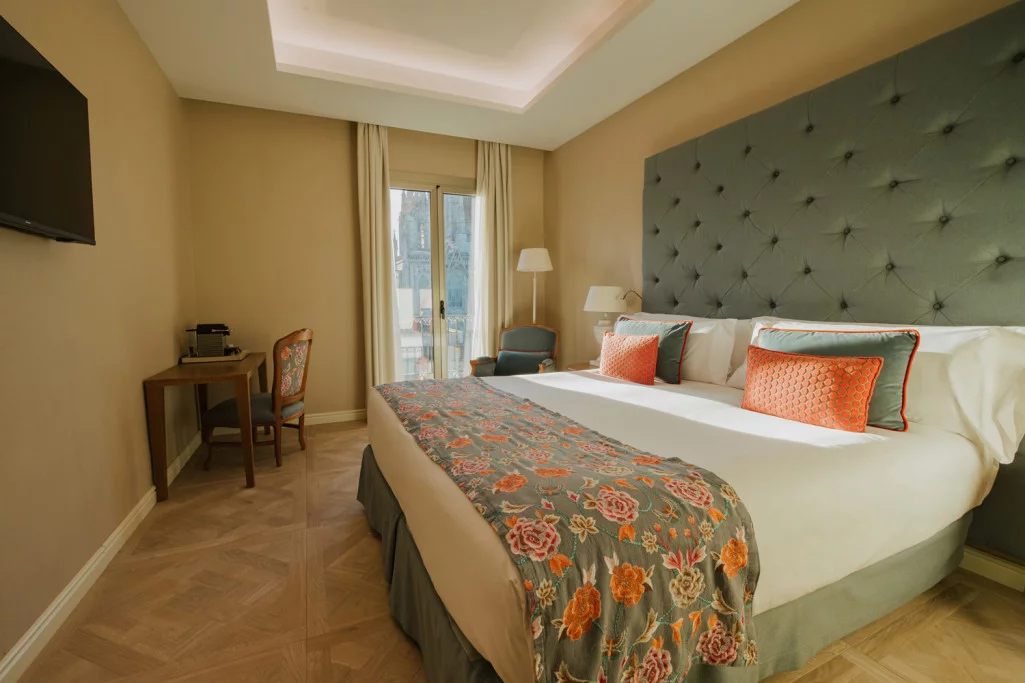
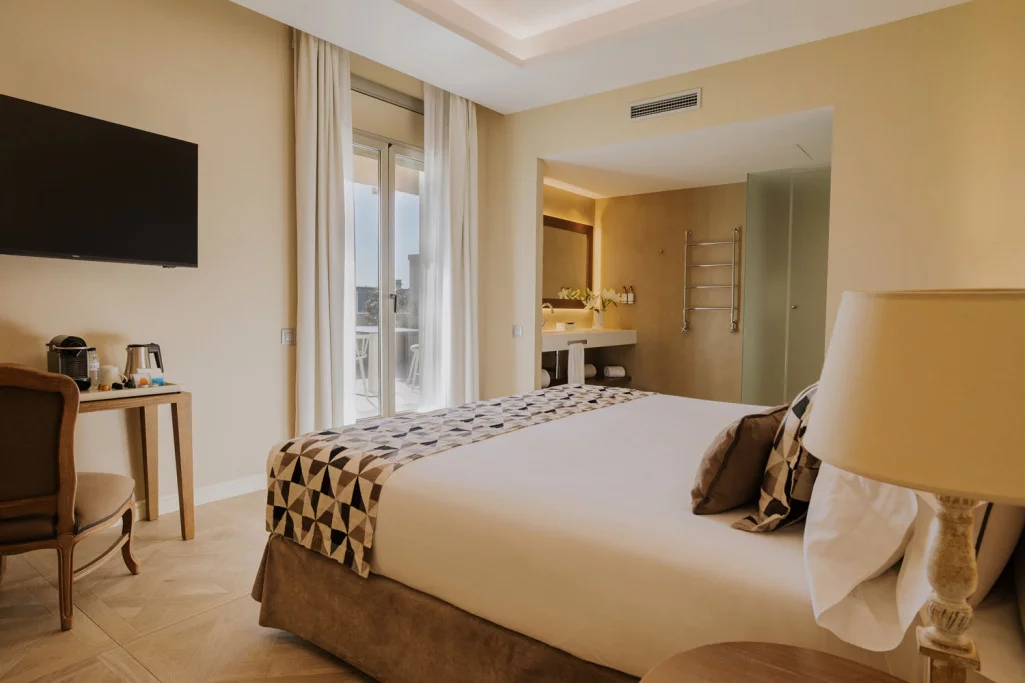
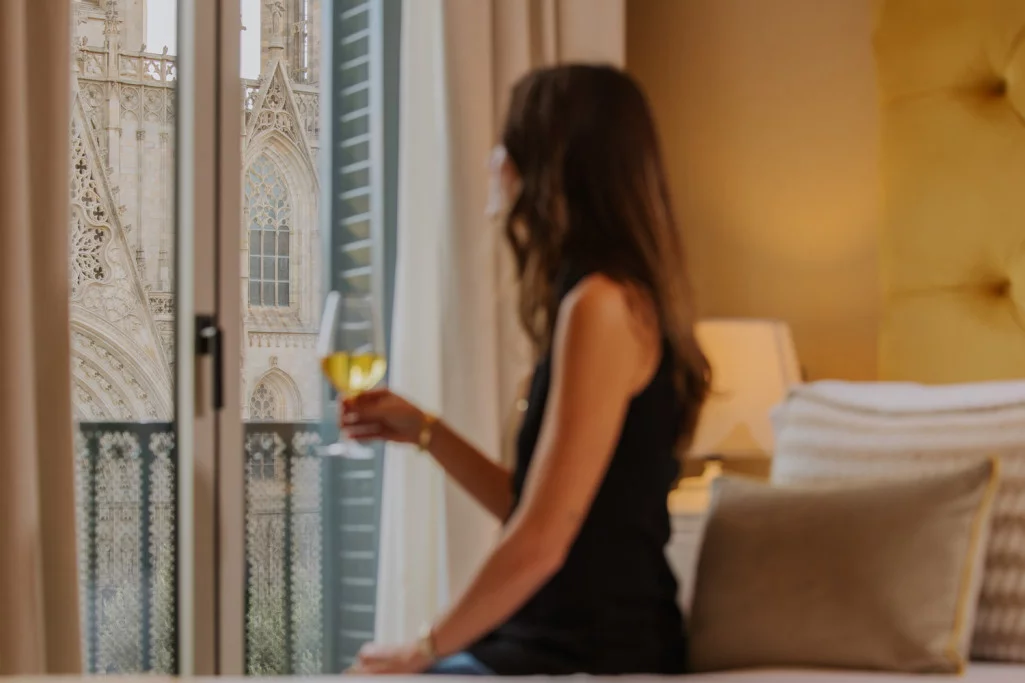
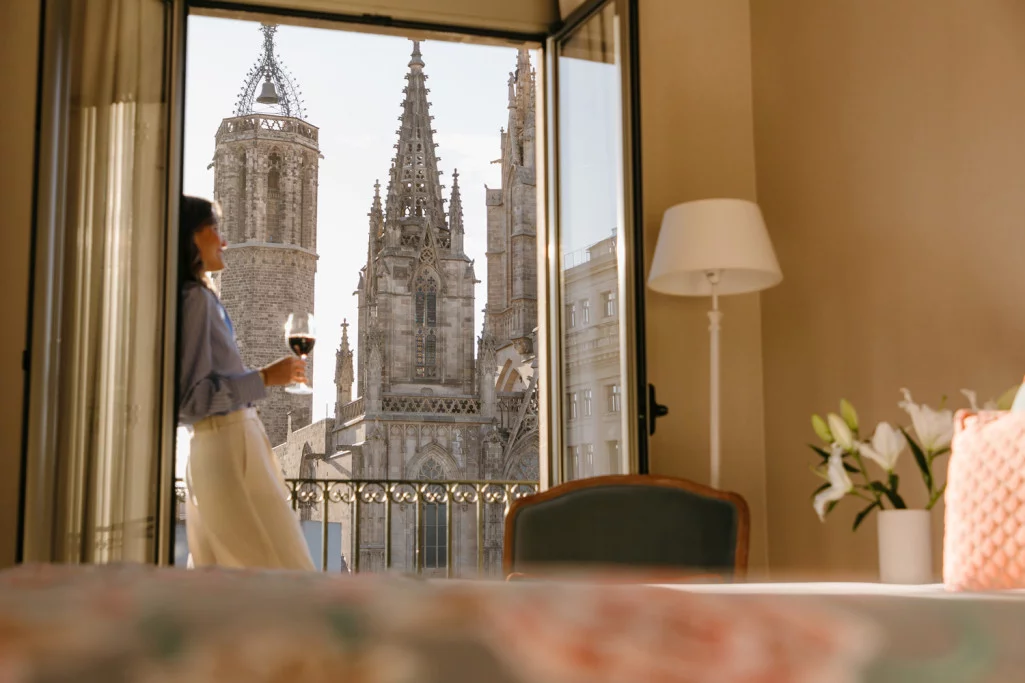
Wake up with Barcelona Cathedral before your eyes. This 25 m² room for one or two guests has a private balcony overlooking one of the city’s most recognisable landmarks. Cathedral views are guaranteed in this room category.
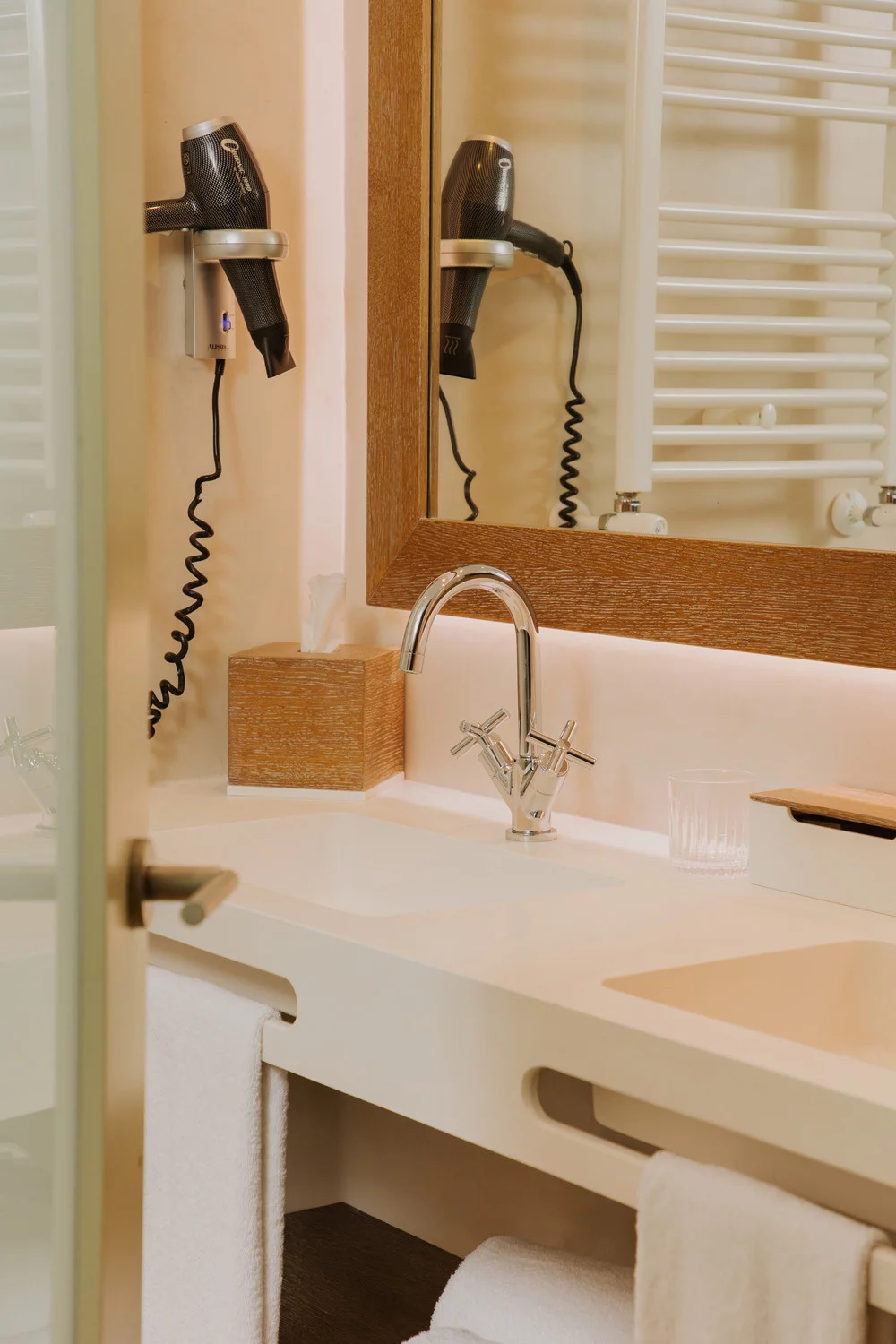
Inside, a rainfall shower, coffee maker and welcoming atmosphere make it a comfortable place to return to after exploring the Gothic Quarter. Step onto the balcony and take a moment to enjoy the city from your own vantage point.
When you book directly with Lamaro, the Design & Craft Tour is included as a complimentary experience, subject to availability and operational confirmation. Explore the tour.
Skyline Suite
1 or 2 guests · terrace
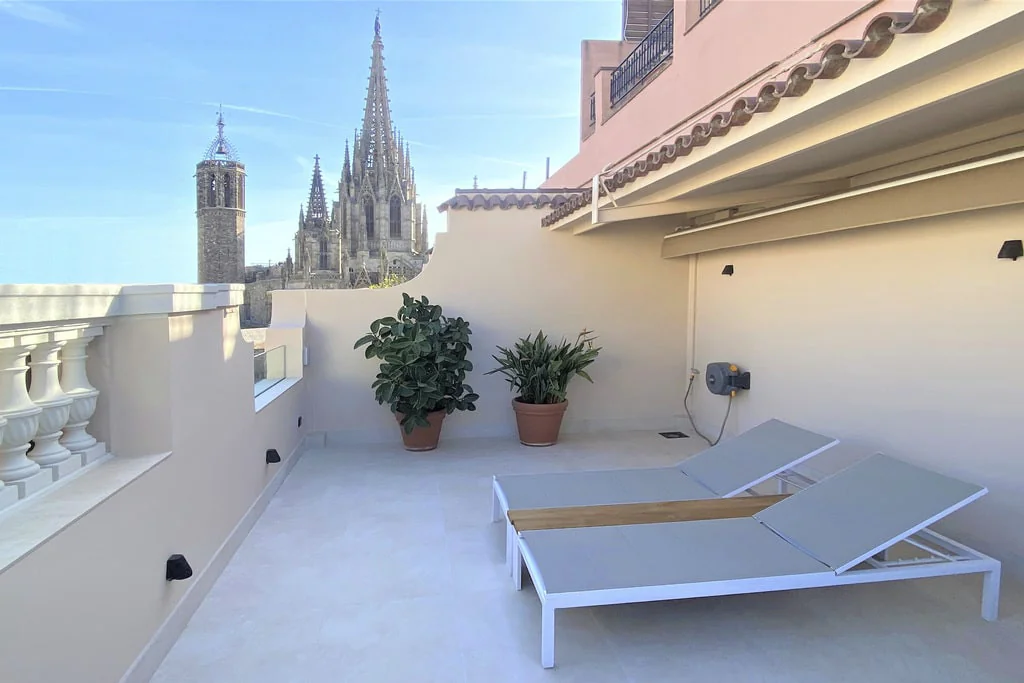
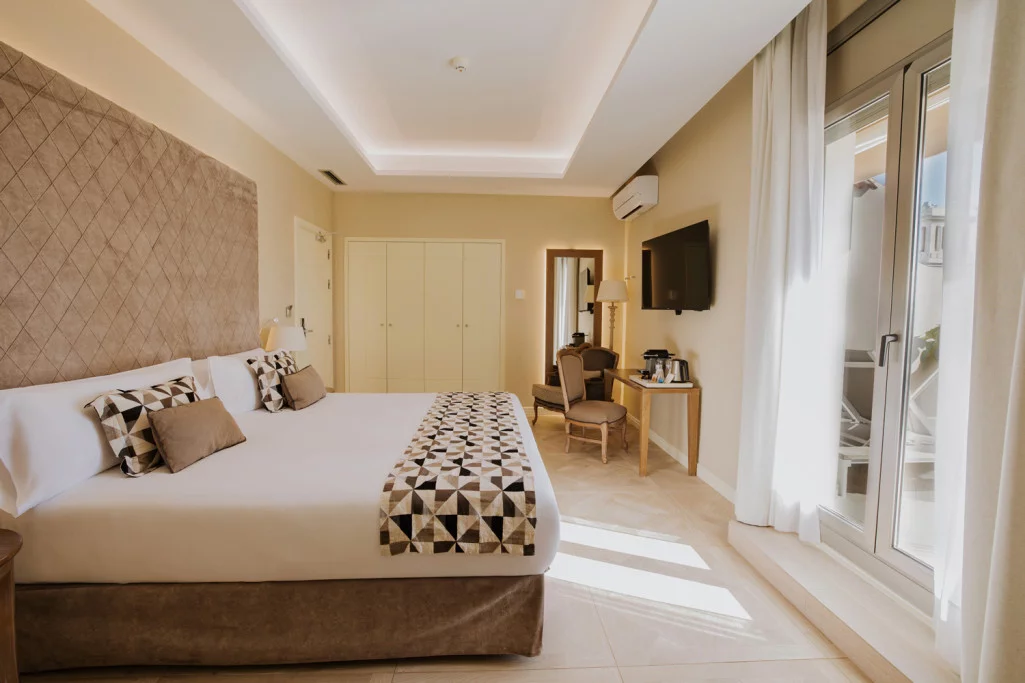
The Skyline Suite is on the hotel’s sixth floor and has a private terrace with a solarium area for 1 or 2 guests. It pairs a comfortable interior with its own outdoor space to enjoy Barcelona in the open air. Interior size (20–33 m²) and terrace size (26–70 m²) vary by room. The views are of the city and vary with each room’s orientation.
Grand Master Suite
2 adults + 2 children · views · 4 balconies
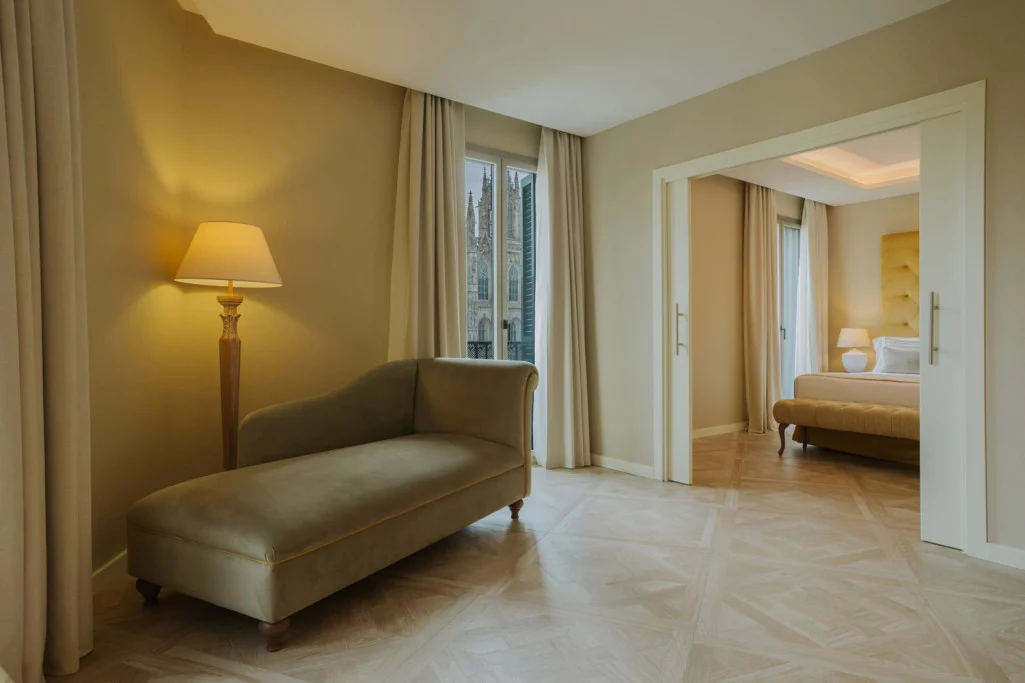
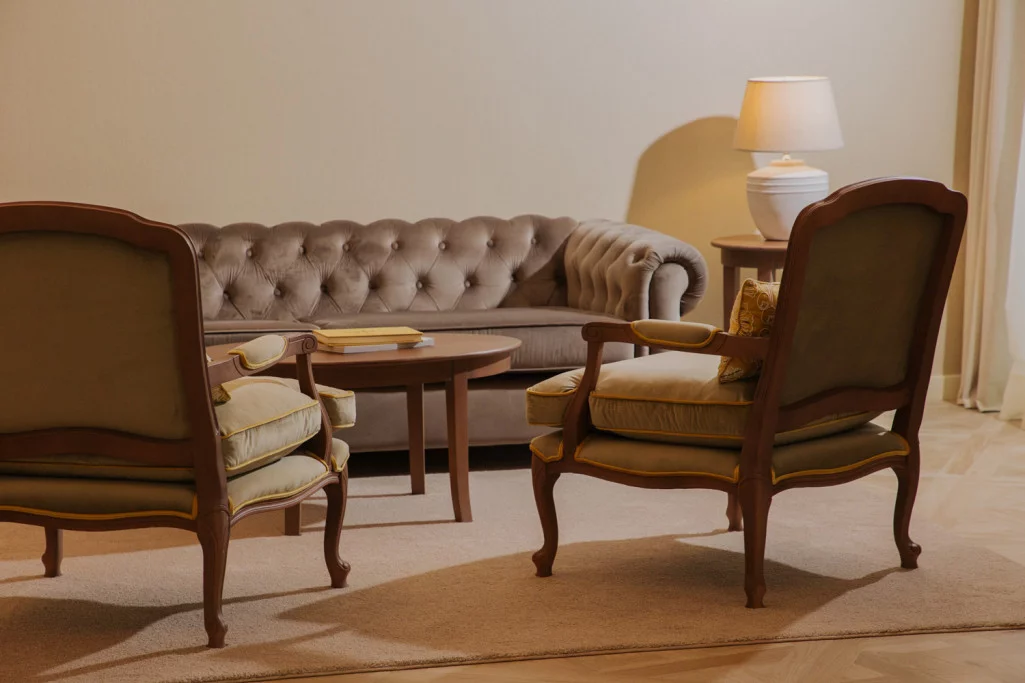
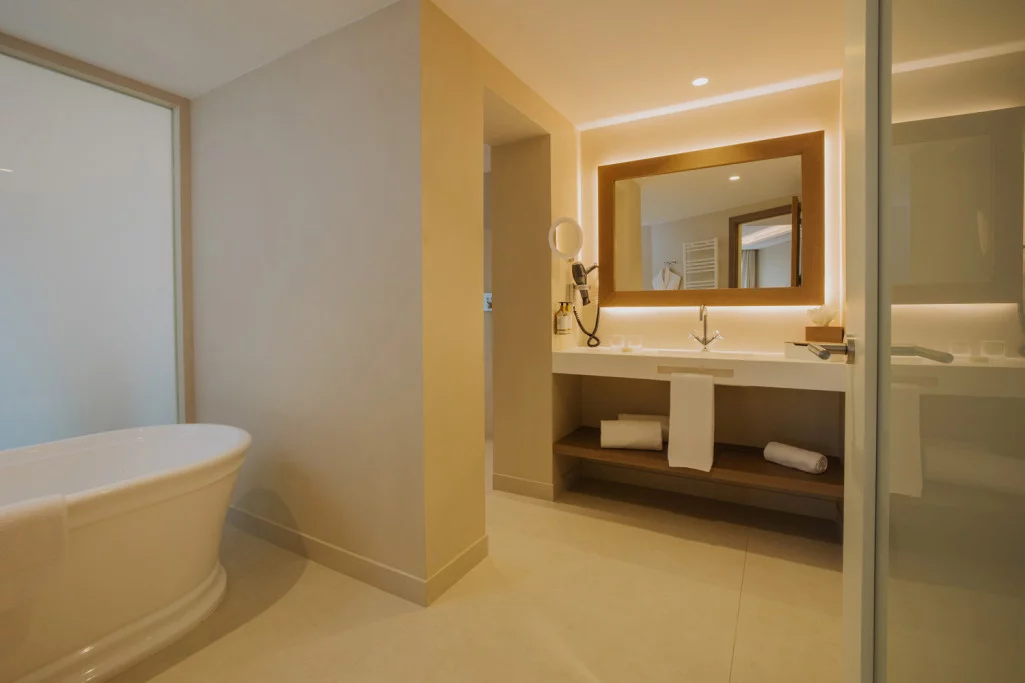
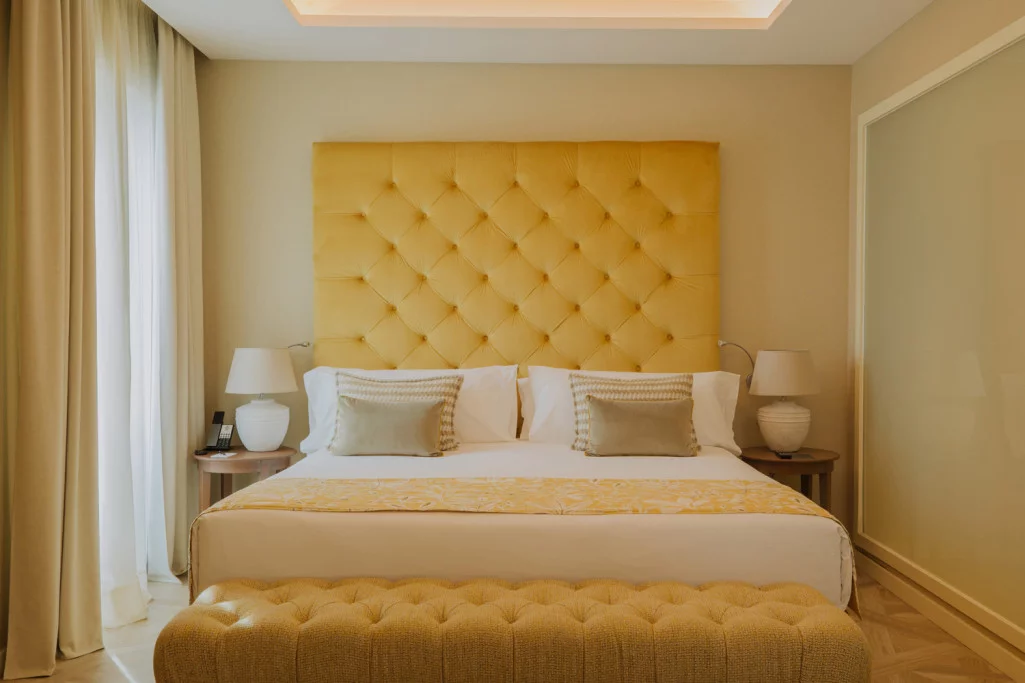
The Grand Master Suite offers 72 m² of space to make yourself at home in Barcelona. Its living room provides a place to spend time together and unwind; the bedroom has a King Size bed, while the bathroom features both a shower and a bathtub. The suite accommodates up to two adults and two children aged 17 or under, making it a comfortable choice for a family stay.
Its four balconies open the suite to the historic centre. Two overlook Barcelona Cathedral, bringing the city into view throughout the day.
When you book directly with Lamaro, the Design & Craft Tour is included as a complimentary experience, subject to availability and operational confirmation. Explore the tour.