


Music in Barcelona
A reason to come back every season
What makes Barcelona’s music scene so special? Where to hear classical music, jazz or electronic music in Barcelona? Which music festivals should you not miss in Barcelona in 2026 and 2027?
There are musical cities that specialise. Barcelona does not. On the same weekend that the Palau de la Música Catalana hosts a baroque cycle, Razzmatazz programmes techno until dawn and the Jamboree welcomes a jazz trumpeter from New Orleans. The city does not choose: it accumulates. And that capacity to contain opposing registers without either losing authenticity is, perhaps, the most singular trait of its musical life.
This is not a recent phenomenon. Since the Liceu opened its doors in 1847, Barcelona has been the setting for one of the most active music scenes in southern Europe. The Catalan bourgeoisie of the nineteenth century built theatres and concert halls with the same ambition with which they built Modernista houses: music was also a way of proclaiming identity and aspiration. That founding impulse is still recognisable today in the three institutions that form the backbone of the city’s classical music life: the Gran Teatre del Liceu, the Palau de la Música Catalana and L’Auditori.
.tmedium.png)
Music in Barcelona
A reason to come back every season
What makes Barcelona’s music scene so special? Where to hear classical music, jazz or electronic music in Barcelona? Which music festivals should you not miss in Barcelona in 2026 and 2027?
There are musical cities that specialise. Barcelona does not. On the same weekend that the Palau de la Música Catalana hosts a baroque cycle, Razzmatazz programmes techno until dawn and the Jamboree welcomes a jazz trumpeter from New Orleans. The city does not choose: it accumulates. And that capacity to contain opposing registers without either losing authenticity is, perhaps, the most singular trait of its musical life.
This is not a recent phenomenon. Since the Liceu opened its doors in 1847, Barcelona has been the setting for one of the most active music scenes in southern Europe. The Catalan bourgeoisie of the nineteenth century built theatres and concert halls with the same ambition with which they built Modernista houses: music was also a way of proclaiming identity and aspiration. That founding impulse is still recognisable today in the three institutions that form the backbone of the city’s classical music life: the Gran Teatre del Liceu, the Palau de la Música Catalana and L’Auditori.
I. The three temples of classical music
The Gran Teatre del Liceu
Founded in 1847 by the Catalan industrial bourgeoisie, the Liceu is one of Europe's great opera houses and the one with the longest tradition on the Iberian peninsula. Its history has not been peaceful: fires in 1861 and 1994, an anarchist attack in 1893 that claimed twenty lives, dictatorship and the post-war years. Each time, the city rebuilt it and brought it back to life. The Liceu that exists today, following the last reconstruction completed in 1999, is a theatre where opera has a daily, uninterrupted presence that few cities in the world can equal.
Its stage has hosted the most important productions of bel canto and classical music, and its orchestra, the Orquestra Simfònica del Gran Teatre del Liceu, founded in 1847, is the oldest orchestra still active in Spain. Conductors such as Manuel de Falla, Richard Strauss and Igor Stravinsky directed from its podium.
The Palau de la Música Catalana
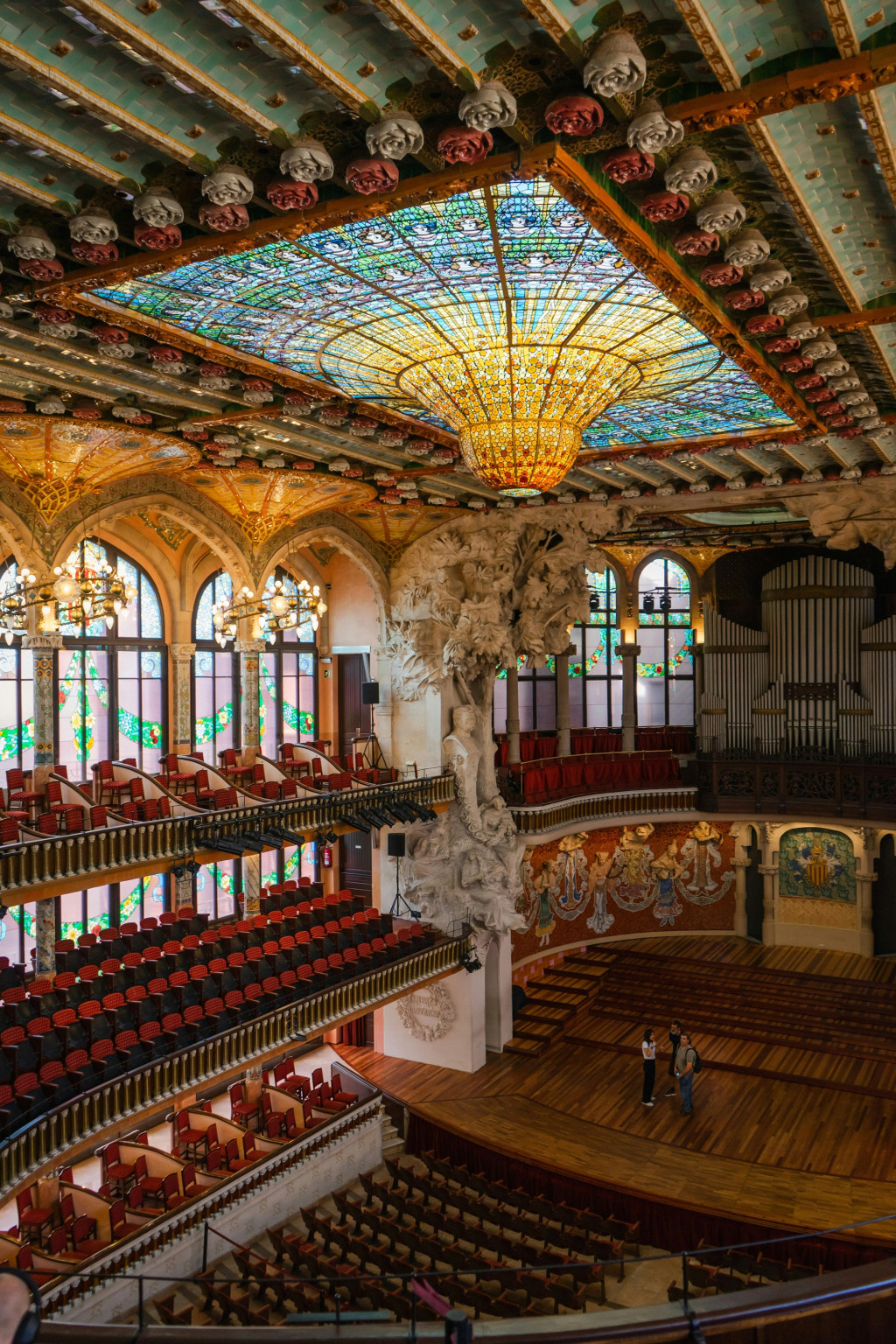
Built between 1905 and 1908 by Lluís Domènech i Montaner and declared a UNESCO World Heritage Site, the Palau de la Música Catalana is the only concert hall in the world with that distinction. Born as the home of the Orfeó Català, a popular choral society, it was conceived as a visual manifesto of Catalan Modernisme: its interior is an explosion of stained glass, mosaic, lattice and sculpture that transforms every concert into an experience that goes beyond the auditory. The afternoon light that passes through the central skylight turns the hall into something almost impossible to describe.
Today the Palau programmes everything from baroque and chamber music to jazz, flamenco and Lied recitals, and is the reference venue for cycles such as Guitar BCN, the Festival Mil·lenni and the Barcelona Jazz Festival. Being at the Palau is, before a single note is played, an architectural experience.
Guitar BCN — an annual cycle running from January to December across the Liceu, the Palau, L'Auditori and the Sant Jordi Club — is one of the city's most distinctive programmes: classical guitar, jazz, flamenco and singer-songwriter across Barcelona's finest stages, with artists including Sílvia Pérez Cruz, Els Amics de les Arts, Maria del Mar Bonet, Andrea Motis and Jorge Drexler, among others.
L'Auditori
Inaugurated in 1999 to a design by Rafael Moneo, Pritzker Prize 1996, L'Auditori is the home of the Orquestra Simfònica de Barcelona i Nacional de Catalunya (OBC) — founded in 1944 by Eduard Toldrà —, the Barcelona Municipal Band, the Escola Superior de Música de Catalunya and the Museu de la Música. With 42,000 m² and four halls of varying capacity — the Sala Pau Casals for 2,200 spectators, the Sala Oriol Martorell for 600, the Sala Tete Montoliu for 400 and the Sala Alicia de Larrocha for 152 — it offers a programme ranging from grand symphonic works to the most intimate chamber format.
The OBC, under the direction of Ludovic Morlot since 2022, has performed at venues including the Musikverein in Vienna, Carnegie Hall in New York and the Elbphilharmonie in Hamburg. Each season its concerts at L'Auditori are one of the most reliable fixtures of the city's cultural calendar.
— In Barcelona, music does not live in temples. It lives in the street, in bars and in repurposed warehouses. —
II. Jazz: a tradition of almost six decades
The Voll-Damm International Jazz Festival Barcelona is, alongside Montreux and North Sea, one of the longest-running and most respected jazz festivals in Europe. Its first edition took place at the Palau de la Música Catalana in 1966, with the Dave Brubeck Quartet as the opening act. In 2026 it turns 60 and celebrates with a programme running from July to November across venues as different as the Palau de la Música, the Liceu, the Jamboree and the Auditori del Fòrum.
The 2026 edition includes Van Morrison — returning to Barcelona almost ten years after his last visit —, Pat Metheny, Marcus Miller with 'We Want Miles!', Marco Mezquida, Andrea Motis with Yamandu Costa, the Barcelona Jazz Orchestra and Ramon Mirabet. The festival also marks the centenary of Miles Davis with a special programme dedicated to his legacy.
Beyond the festival, jazz has a daily presence in Barcelona that few European cities can match. The Jamboree, on the Plaça Reial — five minutes on foot from Lamaro — has been programming jazz and blues seven nights a week for decades. During April and May it also hosts the Mas i Mas Festival, an annual cycle featuring international artists of the first order: the 2026 edition includes Jean Toussaint, Philip Lassiter and Joan Chamorro, among others. The Harlem Jazz Club, in the Born, is another cornerstone of the local scene. The Luz de Gas, in the Eixample, combines jazz, soul and pop in a period setting that is worth visiting for its own sake.
— The Jamboree has been programming jazz seven nights a week, five minutes from the Cathedral, for decades. —
III. The summer festivals: when Barcelona becomes a stage
Primavera Sound
Since its first edition in 2001, Primavera Sound has turned Barcelona into the world capital of independent music for one week every summer. The Parc del Fòrum, facing the Mediterranean, hosts a line-up of nearly 150 artists combining icons of alternative rock with electronic music, pop, hip-hop and avant-garde sounds. The 2026 edition — the twenty-fourth — runs from 4 to 6 June with headliners including Massive Attack, The Cure, Gorillaz, The xx, My Bloody Valentine, Doja Cat and Carl Cox.
Primavera is not confined to the Fòrum. 'Primavera a la Ciutat' extends the festival across venues throughout the city — Apolo, Razzmatazz, CCCB, La Nau — throughout the preceding week, turning Barcelona into a metropolitan-scale music circuit.
Sónar
Sónar was born in 1994 as a festival of advanced electronic music and has become a world reference at the intersection of music, technology and digital creativity. In 2026 it celebrates its 33rd edition on 18, 19 and 20 June at Fira Gran Via, unifying the Sónar by Day and Sónar by Night in a single venue. The line-up includes The Prodigy, Charlotte de Witte, Amelie Lens, Kelis, Skepta, Cabaret Voltaire, Dom Dolla, Goldie and Joy Orbison.
Sónar+D — the creativity and innovation congress that accompanies the festival — moves to a new home at the Llotja de Mar, in the heart of the Born. For anyone who wants to understand where music, technology and digital art are heading, Sónar+D is as compelling as the festival itself.
Cruïlla
From 8 to 11 July, the Parc del Fòrum hosts Festival Cruïlla in its 2026 edition. Unlike Primavera Sound or Sónar, Cruïlla bets on radical eclecticism: rock, soul, electronic music and roots music on the same bill. The 2026 edition confirms Pixies, David Byrne, Halsey, The Black Crowes, Faithless and The Hives, among others.
IV. Classical music in the street: Barcelona Obertura Ciutat de Clàssica
One of the most singular musical initiatives in Barcelona is the Barcelona Obertura Ciutat de Clàssica festival, born from the collaboration between the Liceu, the Palau de la Música and L'Auditori. Each edition programmes dozens of concerts with hundreds of artists across venues spread throughout the city's ten districts, combining major concert halls with spaces that do not normally host music: the Antiga Fàbrica Estrella Damm, Casa Batlló, the Monestir de Pedralbes, the Palau Güell, the Fundació Mies van der Rohe, Torre Bellesguard and Casa Vicens, among others.
The aim is for classical music to be experienced in direct relation to the city's architecture and heritage, creating combinations that are not possible in any other city in the world. A significant proportion of the concerts are free. The ticketed concerts at the Liceu, the Palau and L'Auditori bring together first-rank international names: Asmik Grigorian, Juan Diego Flórez, Martha Argerich, the Quartet Casals, Jordi Savall, Le Concert des Nations and James Ehnes, among others.
V. The alternative scene: the venues that define the city's character
Beyond the great temples and the international festivals, Barcelona has a scene of medium and small venues that defines its everyday musical character. Razzmatazz, in Poble Nou, is one of the most respected clubs in Europe: five rooms in the same building, electronic, indie and rock programming seven nights a week, and a capacity of 3,000 that fills regularly. Sala Apolo, on the Paral·lel, combines rock and pop concerts with cult dance sessions such as the Nasty Mondays and Nitsa Club. Paral·lel 62, in the former Teatro Victoria, is today one of the most versatile stages in the city: jazz, soul, flamenco, roots music and pop coexist in its programme.
For folk and roots music, the Tradicionàrius festival — which holds its annual edition from January to March — is the reference event, with more than 50 concerts, dances and workshops. The Barnasants cycle, an annual singer-songwriter series, tours some twenty theatres and venues across the city each winter with a programme that privileges the lyric and the voice over spectacle.
For chamber music and more intimate formats, the Ibercamera cycle, the Festival Mil·lenni and the Piano Maria Canals — one of the most prestigious international piano competitions in the world, running since 1954 — regularly programme the great names of the international classical circuit at the Palau, the Liceu and L'Auditori.
— Razzmatazz has five rooms in one building. Barcelona's scene does not fit in a single night. —
VI. Lamaro and music: the starting point
The Jamboree, the most historic jazz club in the neighbourhood, is five minutes on foot from Lamaro. The Palau de la Música Catalana, four. The Gran Teatre del Liceu, ten. From the Avinguda de la Catedral, much of the most interesting musical life in Barcelona is within walking distance.
For guests with a direct booking, the Lamaro team can advise, recommend and reserve tickets for the season's concerts and festivals, with a personalised selection based on musical interest, dates of stay and the lead time required. Some concerts at the Palau or the Liceu sell out weeks in advance. Ask our team before you arrive.
カルチャーカレンダー:今後のイベントと開催中の展覧会
イベント・プログラム | 会場・住所 | 日程・時間 | 公式情報 |
|---|---|---|---|
第58回バルセロナ・ジャズ・フェスティバル | 複数の会場。プログラムをご確認ください | 2026年の開催プログラム。日程は各公演をご確認ください。 | |
Orquesta Barroca de Sevilla · Vivaldi, Concerti da Camera | CaixaForum · Av. Francesc Ferrer i Guàrdia, 6–8 | 2026年10月18日 | |
Lorenzo Ghielmi & Anna Maddalena Ghielmi | バルセロナ大聖堂 · Capella del Santíssim · Pla de la Seu, s/n | 2026年10月21日. 20:00。無料招待状は公演の10日前からCasa de l’Almoinaで事前に受け取る必要があります。定員があります。 | |
Actress (Live) + Phran (DJ Set) · Dnit | CaixaForum · Av. Francesc Ferrer i Guàrdia, 6–8 | 2026年10月30日 | |
Primavera Sound Barcelona 2027 | Parc del Fòrum | 2027年6月3日 – 2027年6月5日. 主なフェスティバル開催日。全プログラム:2027年6月2日~6日。 | |
Sónar 2027 | バルセロナ。会場は公式プログラムをご確認ください | 2027年6月17日 – 2027年6月19日 |
ご来場前に公式プログラムと入場条件をご確認ください。一部の催しには予約または招待状が必要です。定員により参加できない場合があります。
If you already have dates and want to know what is on at that moment, write to us. The Lamaro team prepares a personalised selection for guests with a direct booking — including tickets for those concerts that require advance planning.
— Some concerts at the Palau or the Liceu sell out weeks in advance. Book early. —
私たちと一緒に特典付きで予約してください。
-

最安値保証
-

返金不可料金にはキャンセル保険が含まれています
-

アーリーチェックイン / レイトチェックアウト
(空き状況により) -

無料駐車場
-

ミニバー初回補充無料
バルセロナの音楽シーンへの出発点
- テラスまたはバルコニー付き
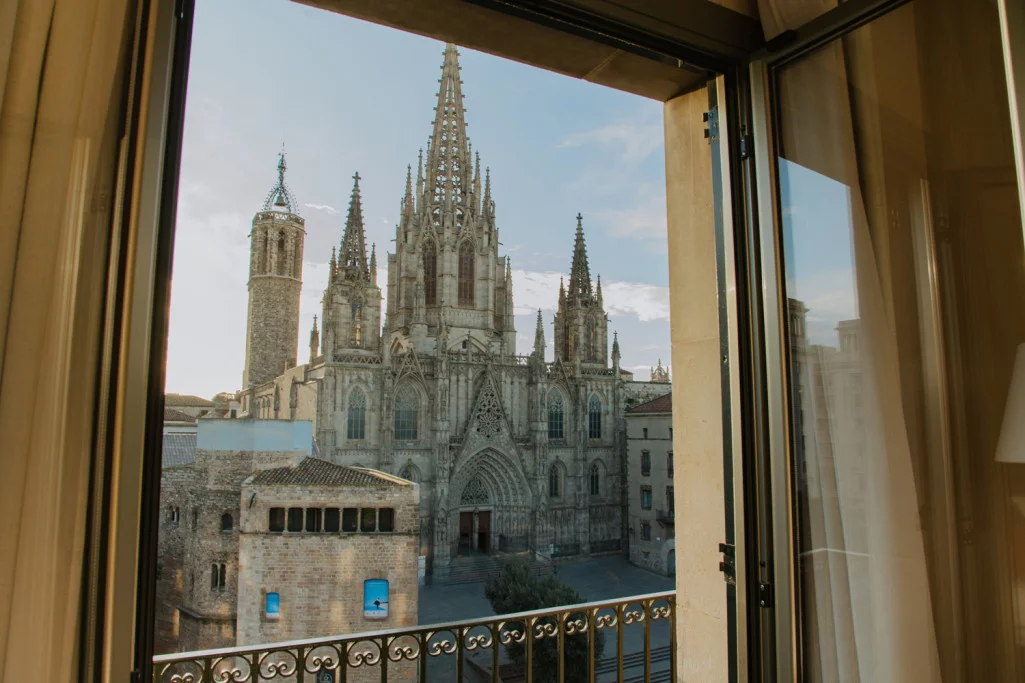
- 大聖堂の眺め
- スイート
- トリプルとファミリー

プレミアムスイート
1または2人の宿泊者 · サイト · バルコニー
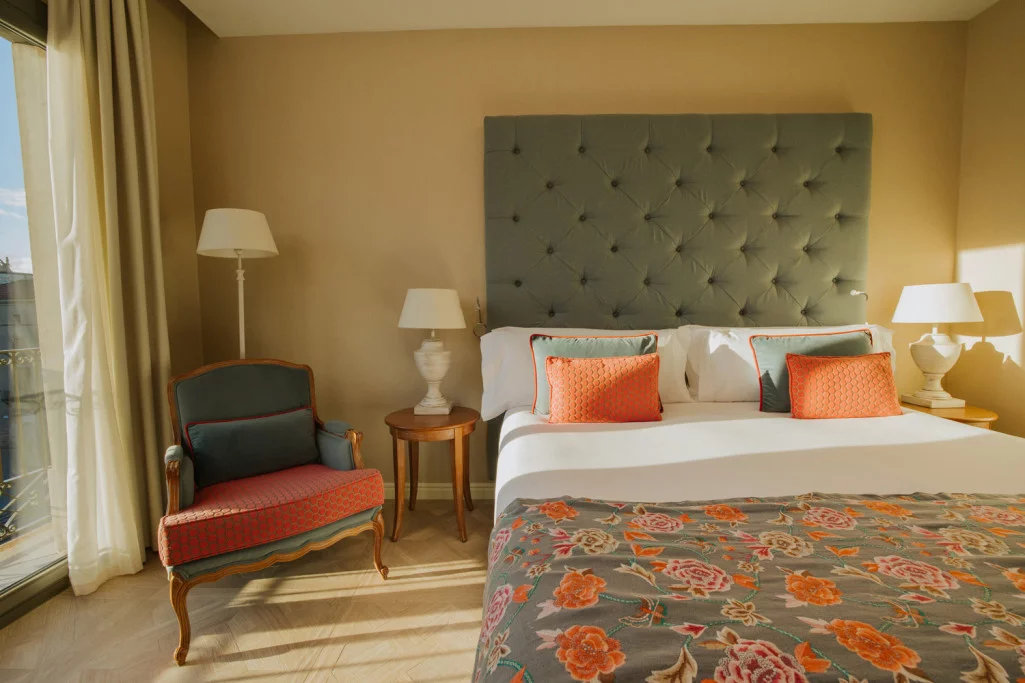
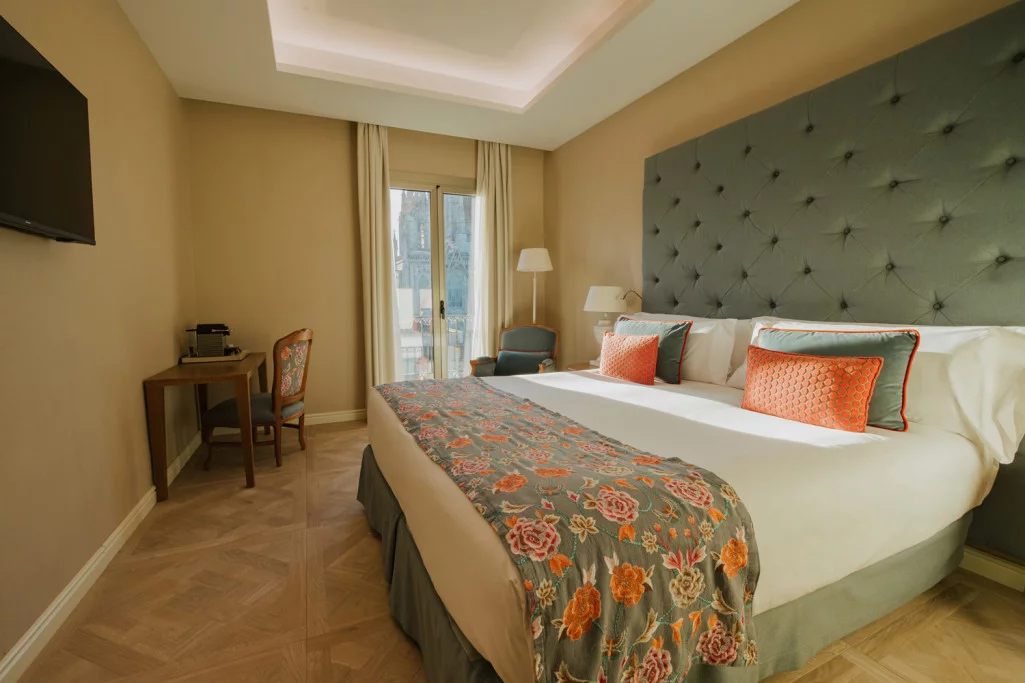
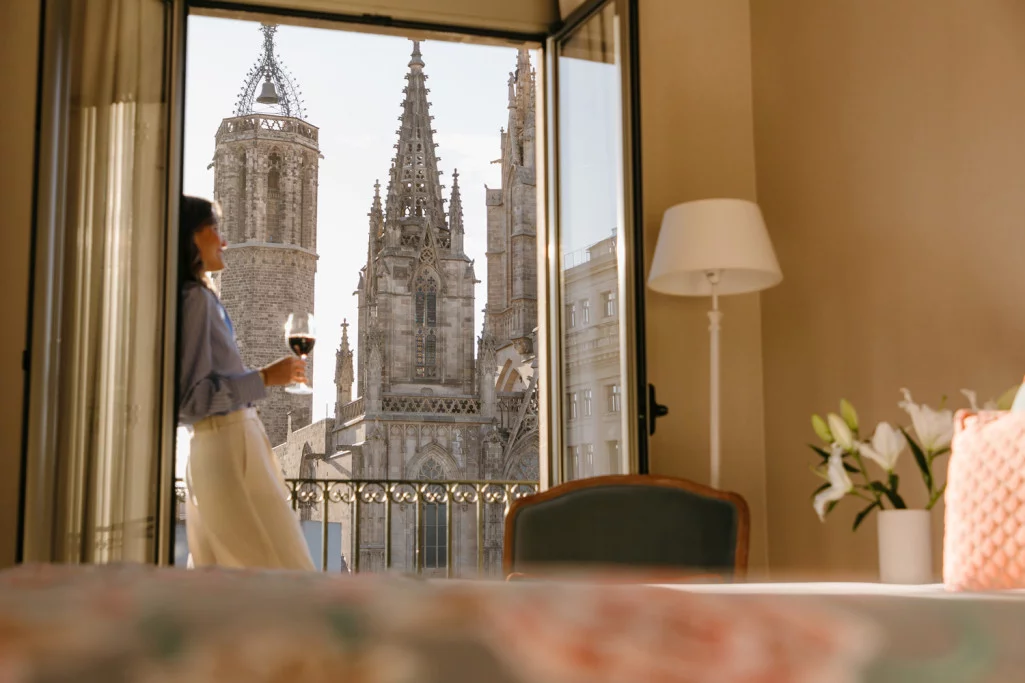
バルセロナ大聖堂を望む朝を。25㎡のこの客室は1~2名様向けで、街の象徴的な風景を眺められる専用バルコニーを備えています。このカテゴリーでは大聖堂の眺望を保証しています。
室内にはレインシャワーとコーヒーメーカーをご用意。ゴシック地区を散策した後は、落ち着いた空間でくつろぎ、バルコニーから街を眺めるひとときをお過ごしください。
Lamaroに直接ご予約いただくと、Design & Craft Tourをホテルからの特典としてご案内いたします。 ツアーの詳細を見る.
スカイラインスイート
1または2名様 · テラス
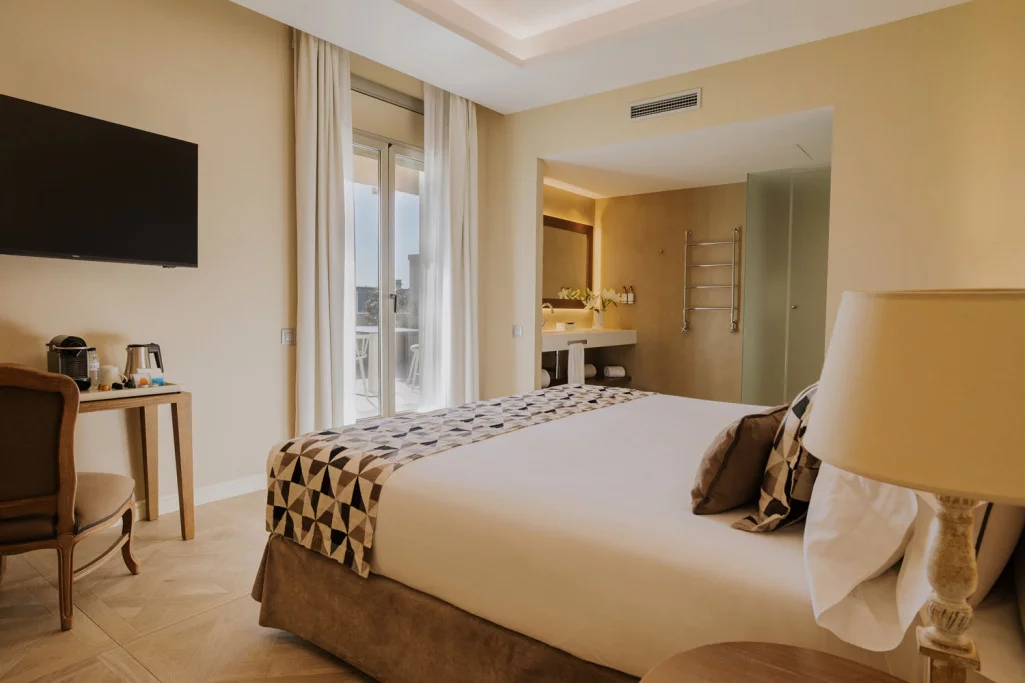
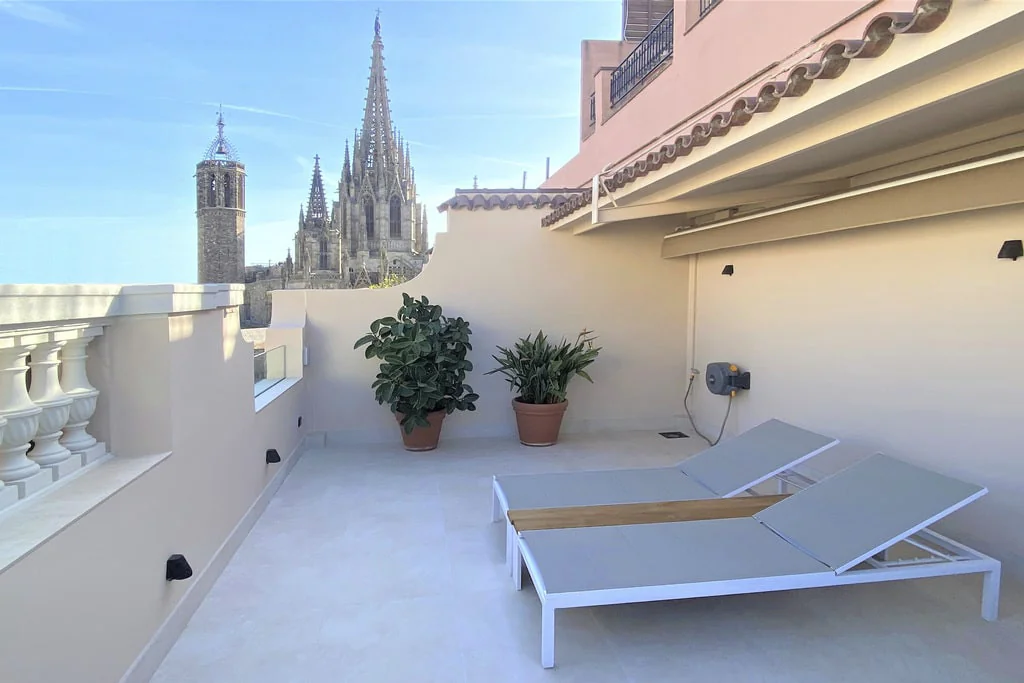
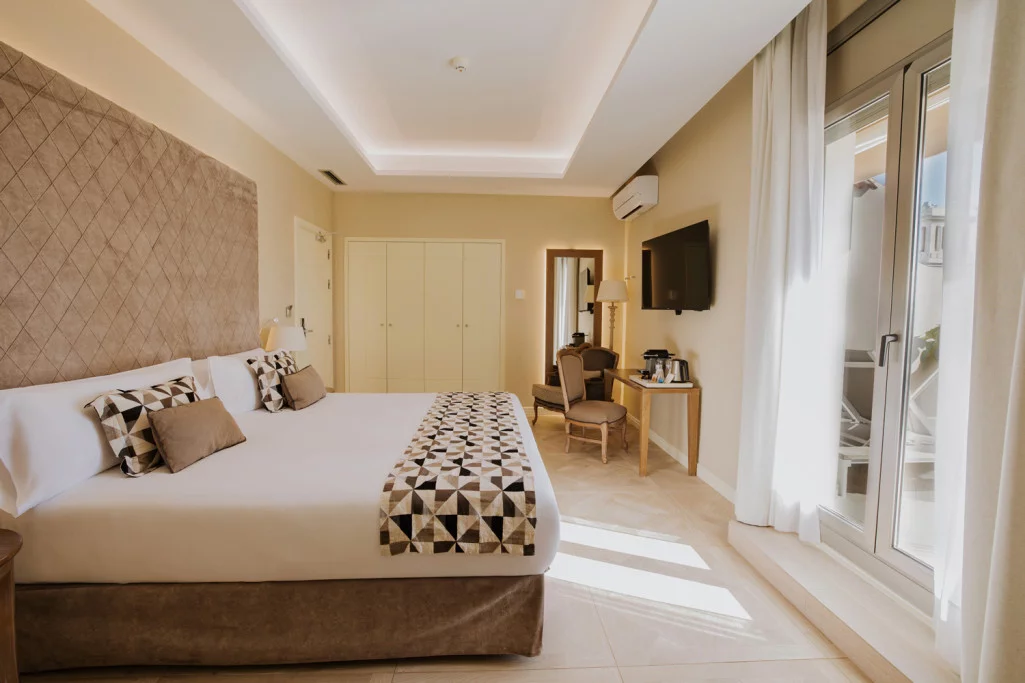
スカイラインスイートはホテルの6階にあり、1~2名様向けのプライベートテラスと日光浴スペースを備えています。快適な室内と屋外のプライベート空間で、バルセロナでの滞在をお楽しみいただけます。室内の広さ(20~33 m²)とテラスの広さ(26~70 m²)は客室によって異なります。眺望は市街地に面しており、客室の位置によって異なります。
グランドマスター スイート
大人2名+17歳以下のお子様2名 · 眺望 · バルコニー4つ
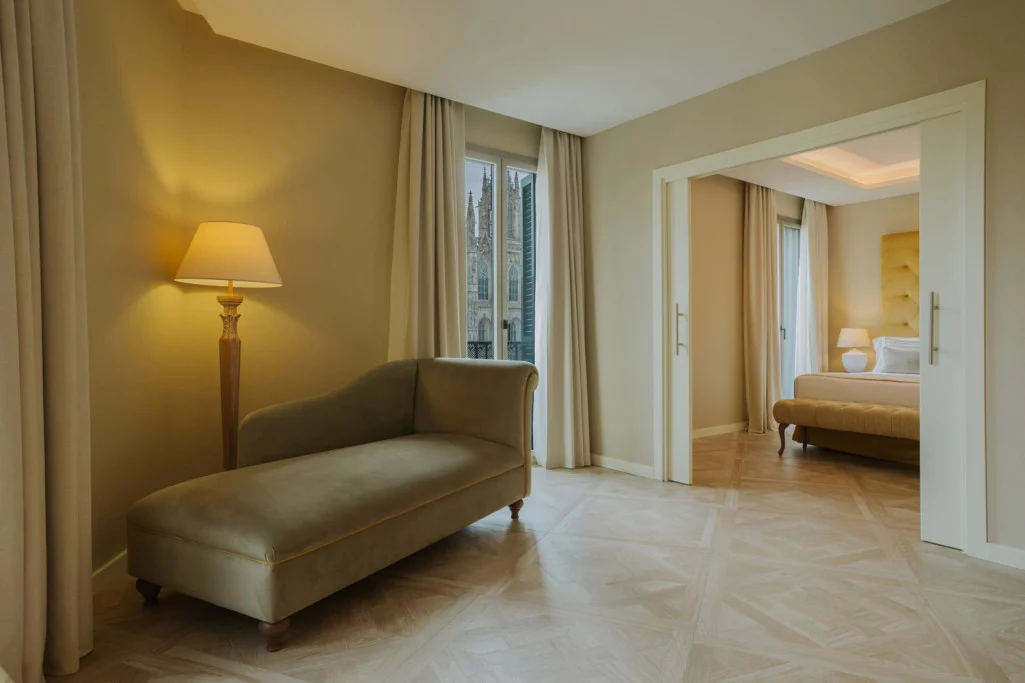
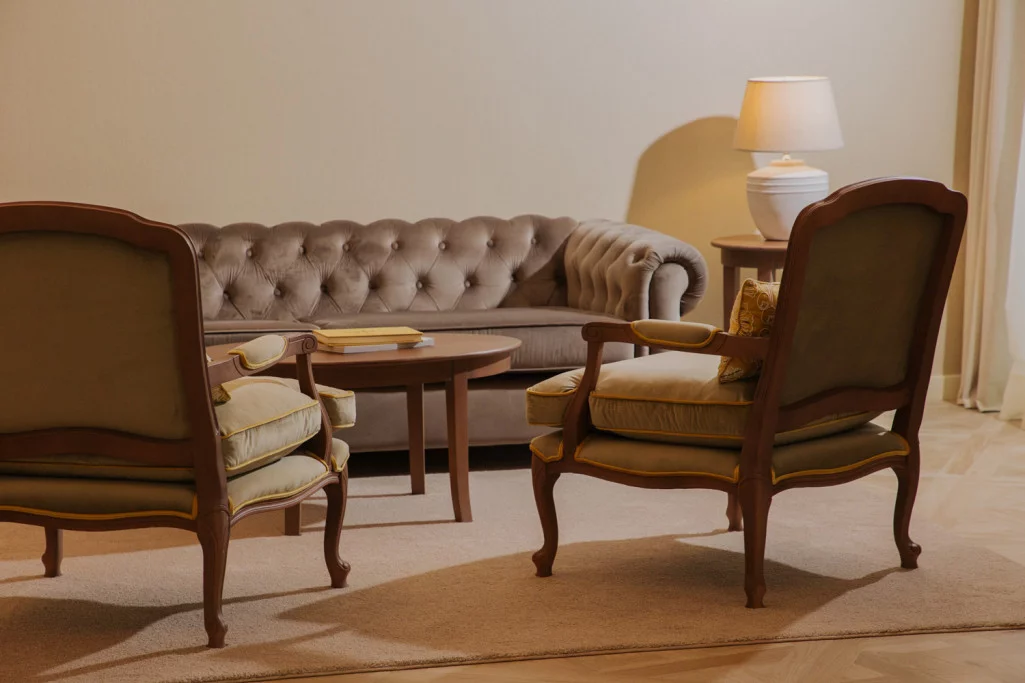
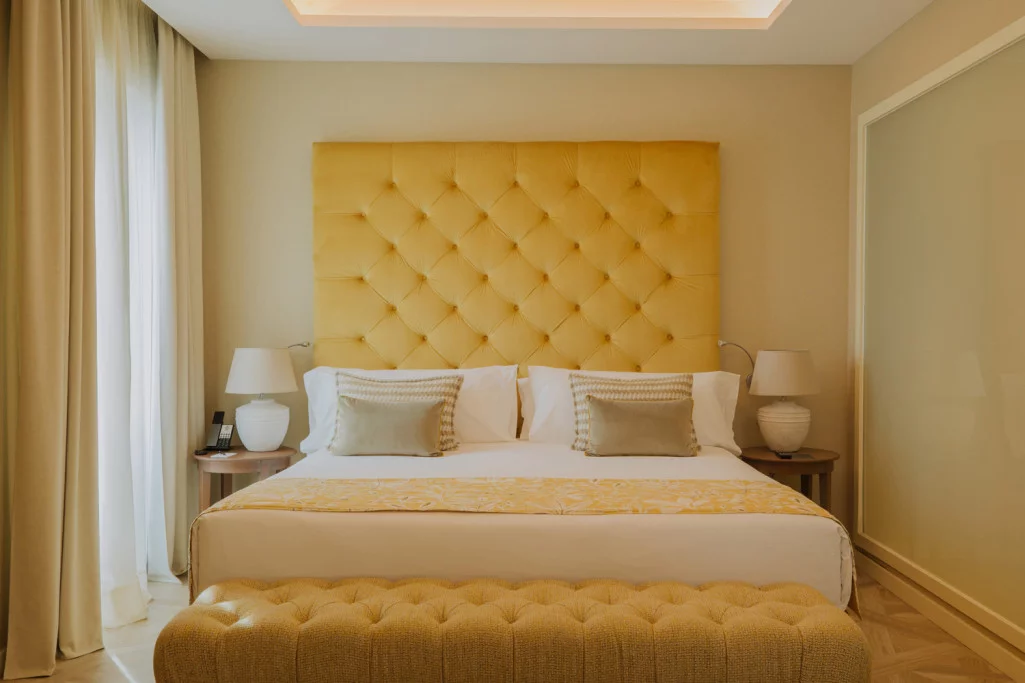
Grand Master Suiteは72㎡のゆとりある空間。リビングルーム、キングサイズベッドのある寝室、シャワーとバスタブを備えたバスルームがあり、大人2名様と17歳以下のお子様2名様までご宿泊いただけます。
4つのバルコニーのうち2つからはバルセロナ大聖堂を望めます。歴史地区の景色を一日のさまざまな時間にお楽しみください。
Lamaroに直接ご予約いただくと、Design & Craft Tourをホテルからの特典としてご案内いたします。 ツアーの詳細を見る.