


Architecture & Urbanism in Barcelona
Barcelona, World Capital of Architecture 2026 | A city that has known how to shine in every century
What makes Barcelona unique from an architectural point of view? What is there to see in Barcelona beyond the Sagrada Família? How to organise a cultural visit to Barcelona in 2026?
There are cities you visit, and cities you read. Barcelona belongs, without question, to the second category. Its urban fabric is a score written in stone, ceramics and concrete: each neighbourhood narrates a different century, each corner reveals an intention. Within a radius of two kilometres coexist a Roman wall, a Gothic cathedral, the most audacious modernism of the 20th century, and the most cited urban experiments of the 21st.
In 2026, with the official designation by UNESCO and the International Union of Architects, Barcelona assumes the title of World Capital of Architecture. It is not the first of its moments of global recognition — but it is the one that most naturally belongs to it. This year, the city invites us to read it as never before.
— In Barcelona, the past is not nostalgia. It is infrastructure. —
.tmedium.png)
Architecture & Urbanism in Barcelona
Barcelona, World Capital of Architecture 2026 | A city that has known how to shine in every century
What makes Barcelona unique from an architectural point of view? What is there to see in Barcelona beyond the Sagrada Família? How to organise a cultural visit to Barcelona in 2026?
There are cities you visit, and cities you read. Barcelona belongs, without question, to the second category. Its urban fabric is a score written in stone, ceramics and concrete: each neighbourhood narrates a different century, each corner reveals an intention. Within a radius of two kilometres coexist a Roman wall, a Gothic cathedral, the most audacious modernism of the 20th century, and the most cited urban experiments of the 21st.
In 2026, with the official designation by UNESCO and the International Union of Architects, Barcelona assumes the title of World Capital of Architecture. It is not the first of its moments of global recognition — but it is the one that most naturally belongs to it. This year, the city invites us to read it as never before.
— In Barcelona, the past is not nostalgia. It is infrastructure. —
I. Barcelona: two thousand years of city and the moments it shone to the world
Founded as a Roman colony in the 1st century BC, transformed into a Mediterranean commercial power during the Middle Ages, reinvented by Modernisme across the 19th and 20th centuries, and projected onto the world stage through events of global scale, Barcelona is a city that has known how to turn every era into an opportunity to redefine itself. The year 2026 coincides with a triple anniversary of extraordinary symbolic weight: the centenary of Antoni Gaudí’s death, the 150th anniversary of the death of Ildefons Cerdà, and the 150th anniversary of the Escola Tècnica Superior d’Arquitectura de Barcelona.
The Universal Exhibition of 1888
On 20 May 1888, Barcelona inaugurated its first Universal Exhibition in the Parc de la Ciutadella, transforming a former military park into a stage for modernity. It was the city’s first great gesture towards the world: Barcelona announced its ambition to become a leading European capital. The Arc de Triomf, built as the ceremonial gateway, and the Castell dels Tres Dragons are the architectural testimonies that survive from that foundational moment.
The International Exhibition of 1929
Forty years later, the International Exhibition of 1929 transformed the hill of Montjuïc into a monumental complex that the city still largely preserves: the Palau Nacional — today the Museu Nacional d’Art de Catalunya — the neoclassical pavilions, the luminous fountains, and above all the German Pavilion by Mies van der Rohe, one of the founding works of 20th-century modern architecture. The original pavilion was dismantled after the exhibition, but its exact replica — reconstructed in 1986 on the same site — remains one of the most studied buildings in Barcelona.
The Olympic Games of 1992
The Barcelona Olympics were one of the most successful urban regeneration projects in recent history. In barely a decade, the city reclaimed its seafront — closed to citizens for a century by the industrial port installations — rehabilitated the Poble Nou neighbourhood, created the Olympic Village, and endowed the city with a network of facilities that still define its quality of life today. The “Barcelona Model” of urban regeneration was studied and replicated in dozens of cities around the world.
The Fòrum de les Cultures 2004
The Fòrum de les Cultures 2004 brought about the transformation of the northern tip of Barcelona’s waterfront — the Barò de Viver area and the Besòs delta — historically segregated from the rest of the city. The new Besòs seafront, Parc Diagonal Mar, the CCIB building, and the reintegration of historically marginalised neighbourhoods into the city’s fabric are its most enduring legacy. It is no coincidence that this same site will host the UIA World Congress of Architects in June 2026.
The World Capital of Architecture 2026
Barcelona’s designation as World Capital of Architecture 2026 closes one cycle and opens another. From 12 February to 13 December, Barcelona becomes a global urban laboratory under the question posed by the World Congress of Architects: Becoming. What is the contemporary city becoming? What should it become?
II. Gaudí and Modernisme: the centenary that closes a cycle
On 10 June 2026, Barcelona commemorates the centenary of Antoni Gaudí’s death — struck by a tram on the Gran Via in 1926. The date coincides with the blessing and inauguration of the Torre de Jesucristo, whose final piece was set in place on 20 February 2026: at 172.5 metres, the Sagrada Família becomes the tallest church in the world and the highest point on Barcelona’s skyline, honouring Gaudí’s expressed wish that human work should not surpass the divine — symbolised by the hill of Montjuïc, which rises to 177 metres above sea level. The Sagrada Família will continue under construction beyond 2026, but this moment marks the close of one of the most significant chapters of a work begun in 1882 that has been transforming the city’s horizon for over 140 years.
Gaudí cannot be understood without his context. Catalan Modernisme was far more than a decorative style: it was a movement of national affirmation that used architecture as political language and cultural manifesto. The Catalan industrial bourgeoisie, enriched by colonial trade and the Industrial Revolution, found in Modernisme the perfect vehicle to proclaim that Catalonia had its own culture, its own history, and its own ambitions. Every building was, also, a declaration.
Casa Batlló, La Pedrera, Park Güell and Casa Vicens are formal laboratories where Gaudí developed an unprecedented grammar: parabolic structures that anticipate computer-aided design, ceramic claddings inspired by natural forms, interior spaces that function as living organisms in which light is the primary material.
Behind much of Gaudí’s most audacious work stands a figure without whom it would not have been possible: Eusebi Güell, industrialist and patron, who understood from the outset that he was in the presence of a genius and granted him an unprecedented degree of creative freedom. Park Güell, Palau Güell and the Crípta de la Colònia Güell are the fruit of that singular relationship between an architect who conceived no limits and a client who imposed none.
Beyond the great icons, Barcelona offers a less well-known and often more revealing dimension of Modernisme: Casa Vicens, Gaudí’s first signed work, and Torre Bellesguard, a manor house that dialogues with medieval architecture with extraordinary subtlety, allow visitors to trace the architect’s evolution from his earliest formal explorations to the full maturity of his definitive language.
The Passeig de Gràcia concentrates the densest expression of Barcelona’s Modernisme. In barely one city block, between numbers 35 and 45, three masterpieces by three different architects stand side by side: Casa Lleó Morera by Domènech i Montaner, Casa Amatller by Puig i Cadafalch, and Casa Batlló by Gaudí. The contrast between the three — each radically different in language, ornamentation and relationship to the street — led Barcelonans to nickname this block, with affectionate irony, the Manzana de la Discordia (Block of Discord). It is, in reality, one of the most extraordinary architectural ensembles in Europe: three works from the same period, in the same place, demonstrating that Modernisme was not a uniform style but a shared attitude.
Modernisme was not only Gaudí. Lluís Domènech i Montaner, perhaps the most complete architect of the generation, left us two works declared UNESCO World Heritage Sites: the Palau de la Música Catalana — an explosion of light, colour and ceramics that transforms every concert into an unparalleled visual and sensory experience — and the Recinte Modernista de Sant Pau, a hospital conceived as a garden city where pavilions decorated with mosaics and sculptures were intended to contribute to patients’ recovery as much as medicine itself. Josep Puig i Cadafalch, for his part, developed a Modernisme of more historicist and Nordic roots, visible in Casa Amatller and the Casas Terrades, known as the Casa de les Punxes. Together, these three architects made Barcelona, between 1890 and 1920, the city with the greatest concentration of Modernist architecture in the world.
— Gaudí did not imitate nature. He turned it into a structural system. —
III. Ildefons Cerdà and the Eixample: the most relevant urbanism in the world
In 1859, Ildefons Cerdà won the competition for Barcelona’s expansion beyond its medieval walls. His proposal — the perfect grid of the Eixample with chamfered corner blocks, interior gardens and equitably distributed amenities — was revolutionary for a reason that today seems astonishing: Cerdà thought the city from the perspective of its most vulnerable inhabitants, orienting every design decision towards liveability, hygiene and social equity.
In 2026, Barcelona celebrates the 150th anniversary of his death by rediscovering that his humanist vision of urbanism is more relevant than ever. The Superilles — which return public space to pedestrians by restricting traffic within nine-block superblocks — the recovery of interior courtyard gardens, and the sustainable mobility network are, at their core, direct updates of Cerdà’s original dream: a just, green and breathable city for all people.
The best way to understand the Eixample is to walk it. Only by strolling its chamfered corners, observing the calculated width of its pavements, and peering into its landscaped interior courtyards does one grasp the integral vision of an urban planner who, 165 years ago, was already anticipating the challenges of the 21st-century city.
IV. Contemporary architecture and Superilles: the city that reinvents itself
Barcelona has the remarkable capacity to renew itself without losing its character. The 1992 Olympics opened the city to the sea, rehabilitated Poble Nou and created the Anell Olímpic on Montjuïc. The architectural capital status of 2026 proposes a renewal of a different nature: no longer physical but conceptual, oriented towards rethinking the urban model for the coming decades.
The Superilles, known internationally as Superblocks, are today the most cited and studied urban experiment in the world. The logic is elegant in its simplicity: group nine Eixample blocks into a unit and restrict through traffic, freeing the interior for pedestrians, cyclists, gardens and community activity. The result includes a significant reduction in noise and air pollution, an increase in urban green mass, and a recovery of public space as a place of encounter and life.
The 22@, the former industrial district of Poblenou transformed into a technology and creative hub, is the other great laboratory of contemporary Barcelona. Studios of international reference such as RCR Arquitectes — Pritzker Prize 2017 — EMBT, Coll-Barreu and Flores & Prats work and exhibit in Barcelona, making the city one of the most vibrant design ecosystems in Europe. The Torre Glòries by Jean Nouvel, the Mercat de Santa Caterina by EMBT, and Parc Diagonal Mar are among the contemporary buildings that have enriched the profile of an already extraordinarily architecture-dense city.
— The Superilles are the response of a city that chose quality of life over the speed of traffic. —
V. Emerging studios: the new generation
Beyond the great names and iconic buildings, Barcelona is home to a young, committed and internationally recognised architectural scene that works at the scale of the everyday: affordable housing, neighbourhood facilities, rehabilitation of the existing building stock. Studios such as La Col, Straddle3 and Harquitectes have demonstrated that high-quality, socially responsible architecture that respects its environment is perfectly achievable even without large budgets.
The Escola Tècnica Superior d’Arquitectura de Barcelona (ETSAB), whose 150th anniversary is celebrated in 2026, has trained several generations of architects who have defined the contemporary profile of the city. The exhibition Seny i Rauxa, on view at the Museu del Disseny from May to August, traces this legacy with an equally critical and celebratory eye.
The 48H Open House Barcelona festival, scheduled for 24 and 25 October, is the perfect occasion for those wishing to access the less visible side of Barcelona’s architecture: more than 250 buildings normally closed to the public — from studios in Eixample apartments to converted factories in Poble Nou — open their doors for a weekend.
VI. The Gothic Quarter: between medieval stone and the city of today
Barcelona’s Gothic Quarter is a singular experience: a fully lived-in neighbourhood, with residents, shops and the pulse of city life, built upon and between buildings of extraordinary historical richness. The Cathedral of Santa Eulàlia, the Palau Reial Major, the Capella de Santa Àgata and the Pont del Bisbe coexist with restaurants, artisan workshops and antiquarian bookshops in an urban fabric that has not lost its human scale or its character as an inhabited neighbourhood.
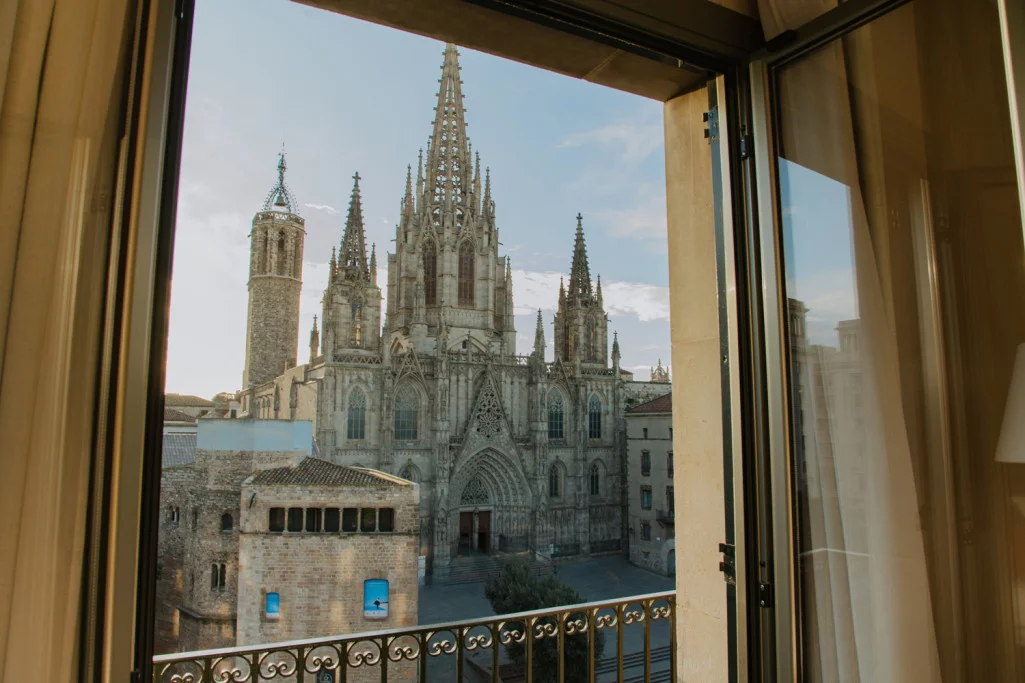
The Cathedral of Barcelona is the spiritual and architectural centre of this medieval layer. Its construction began in 1298 on the foundations of a 4th-century early Christian basilica, which in turn stood over the Roman forum of Barcino: three superimposed epochs on a single sacred ground. Inside rest the remains of Santa Eulàlia, martyr and co-patron of the city, in a 13th-century Romanesque crypt of extraordinary sobriety and beauty. The devotion to Eulàlia — executed by the Romans according to tradition when she was only thirteen — is one of the oldest and most unbroken narrative threads in the city’s history.
The Cathedral’s main façade deserves particular attention: although the interior is authentic Gothic from the 14th century, the façade we see today was built between 1887 and 1913 following the original medieval plans that had remained in the archives for four centuries. It is a unique case of Gothic executed with 20th-century industrial techniques over 15th-century designs, and reflects the same impulse that animated Modernisme: the will of a city to reclaim its historical identity through architecture. The Pont del Bisbe, that delicate neo-Gothic footbridge connecting two institutional buildings, responds to the same logic: it was built in 1928, when Neo-Gothic was already a conscious stylistic choice and not a constructive necessity.
Architecturally, Catalan Gothic defines its own style within the great European Gothic family: horizontal breadth rather than verticality, wide-span naves, interior buttresses that generate lateral chapels, and a relationship with light that is more contained and meditative than that of the cathedrals of northern Europe. It is an architecture made for the Mediterranean, conceived for a specific climate and way of life.
The carrer de la Corribia and the network of narrow streets surrounding it preserved the living memory of the medieval guilds that gave the neighbourhood its economic and social shape: blacksmiths, tanners, chandlers, silversmiths and cobblers organised their lives and work around these tight streets, where workshop, home and temple formed an indivisible unit. In the late 19th century, as part of the great urban reforms transforming Barcelona’s historic centre, this medieval fabric was demolished to open the Avinguda de la Catedral. The operation responded to a dual logic: improving circulation and, above all, clearing the front of the Cathedral to create the monumental perspective that frames it today. It was a decision typical of its era, when European cities sacrificed historical layers in the name of progress and representation. During the excavations prior to construction, numerous Roman ruins appeared — streets, domestic structures, remains of the forum — confirming that the subsoil of this corner of Barcelona is among the archaeologically richest on the entire Iberian Peninsula. Some of those finds can be visited today at the MUHBA, literally beneath the feet of those strolling along the avenue.
An operation of even greater scale transformed the eastern edge of the neighbourhood just a few years later: the opening of Via Laietana, executed between 1908 and 1913, cut an artery 50 metres wide through the densest medieval fabric of the city, demolishing more than two thousand buildings and displacing thousands of residents. The aim was to connect the port with the Eixample and — in the hygienist language of the era — to sanitise a neighbourhood considered insalubrious and labyrinthine. The price was the irreversible destruction of one of the most complete medieval complexes in Europe. Here too the excavations yielded extraordinary finds: entire stretches of the Roman wall, baths, mosaics and domestic structures that today form part of the MUHBA’s collections. Via Laietana is today an invisible but perceptible boundary: to the west, the Gothic Quarter; to the east, the Born. Two neighbourhoods with distinct characters, separated by an avenue born of destruction that, with time, has become an inseparable part of the city’s physiognomy.
The Born deserves a visit in its own right. At its centre, Santa Maria del Mar is for many the most emotionally powerful Gothic building in Barcelona: built between 1329 and 1383 by the people of the Ribera neighbourhood — fishermen, merchants, dock workers — its interior is a masterclass in what Catalan Gothic can achieve with light and space when stripped of all superfluous ornament. Three naves of almost identical width and height, slender octagonal columns like trees, and a stained-glass window that on western afternoons turns the interior to gold. There is no cathedral in Europe that achieves so much with so little. The Mercat de Santa Caterina, rehabilitated by EMBT with its celebrated undulating mosaic roof, and the Museu d’Història de Catalunya in the Palau de la Llotja complete a neighbourhood that is, by rights, one of the most historically dense and vibrant urban ensembles in the city.
The plots cleared by the demolition did not remain empty for long. Over the following decades, Via Laietana consolidated itself as a showcase of bourgeois architecture from the first third of the 20th century: tall buildings inspired by the Chicago School, where the ground and upper floors concentrated ornamentation while the rest of the façade favoured restraint. The construction of the avenue was divided into three sections, with architects of the stature of Lluís Domènech i Montaner — responsible for the stretch between the port and the Plaça de l’Àngel — and Josep Puig i Cadafalch, who directed the following section as far as Sant Pere Més Baix. The result is an avenue with its own architectural character, poised between Noucentisme — the classicist movement that succeeded Modernisme, more restrained and of Mediterranean inspiration — and the incipient rationalism of the 1930s, which contrasts vividly with the intimate scale of the Gothic Quarter on one side and the Born on the other. Today, that contrast is also part of Barcelona’s character: the city that destroys and builds.
The neighbourhood also offers smaller-scale pieces worthy of attention in their own right: the Palau del Lloctinent, whose late Renaissance elegance few buildings in the city can match; the Plaça de Sant Felip Neri, one of the most sheltered and silent squares in Barcelona, whose walls still bear the marks of the civil war; and, below street level on the carrer Regomir, the 1st-century Roman baths: a reminder that the Gothic Quarter is not only medieval, but the sum of all the cities that Barcelona has ever been.
VII. Lamaro Hotel: the observatory of the Avinguda de la Catedral
For those who wish to experience this layered Barcelona with depth and comfort, Lamaro Hotel offers a position no other hotel in the city can replicate. Founded in 1951 by Antonio Lamaro in the building it has occupied ever since, the hotel stands in the heart of the city’s Roman and medieval precinct — in the heart of the Gothic Quarter, less than one hundred metres from the Cathedral of Barcelona, the MUHBA and the principal monuments of the Barri Gòtic.
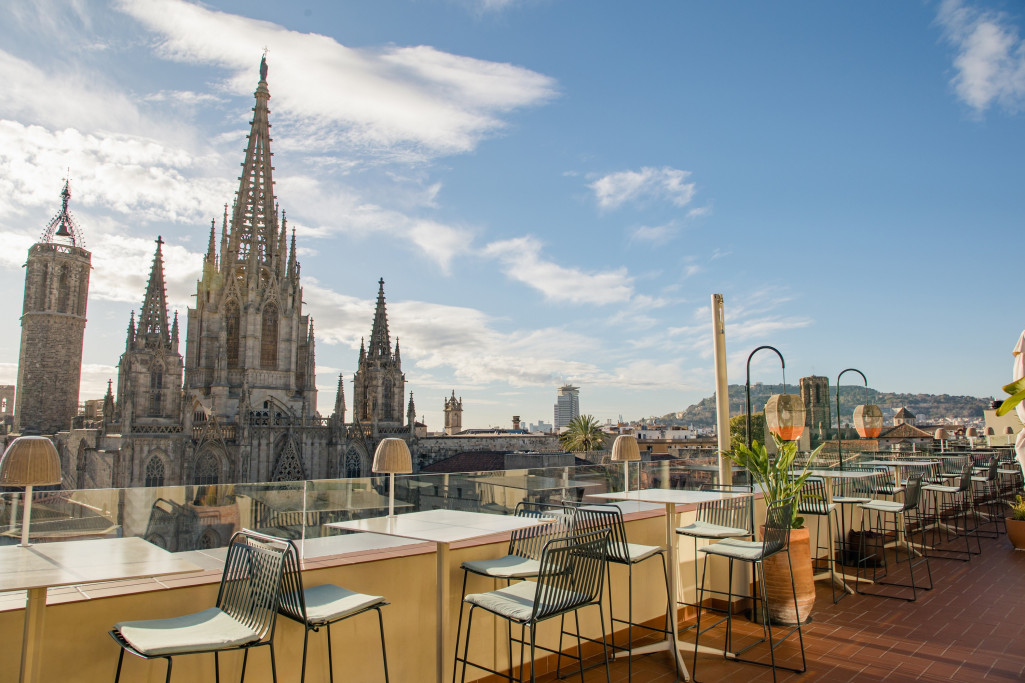
The Avinguda de la Catedral is the oldest urban axis in Barcelona: traced over the Roman cardo maximus, flanked by the remains of the 4th-century wall and presided over by the Neo-Gothic façade of the Cathedral, it condenses in barely two hundred metres the complete stratigraphy of the city. From the rooftop L’Àtic and from some of the hotel’s rooms, this perspective becomes the ideal starting point for orienting oneself in the city and understanding, at a glance, the superimposition of eras that defines Barcelona.
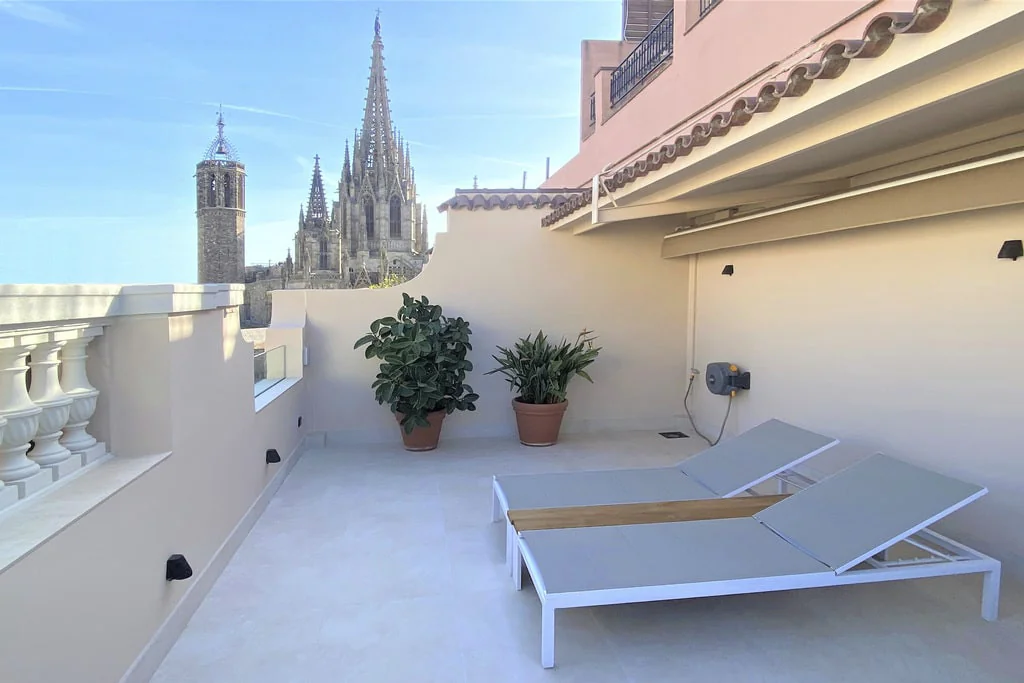
Lamaro’s architecture tours begin precisely on the rooftop: a privileged observation point from which the Cathedral’s bell towers, the rooftops of the Gothic Quarter and, on clear days, the horizon of the Mediterranean compose a unique view. From here, our team designs bespoke itineraries according to each guest’s specific interest: structural Gaudí, Cerdà’s urbanism, underground Roman Barcelona, contemporary architecture, or the emerging studios of Poble Nou.
At the end of the day, the rooftop L’Àtic is also the ideal place to integrate everything seen: the city at dusk, with the Cathedral in the foreground.
Lamaro as a starting point: distances to the main attractions
The hotel’s position on the Avinguda de la Catedral puts much of the city within walking distance. For more distant attractions, the metro and taxi are fast options from the Jaume I and Urquinaona stops, both less than 5 minutes on foot from the hotel.
Walking times estimated at normal pace (5 km/h). Metro from Jaume I or Urquinaona. Taxi with normal urban traffic.
— Some hotels have views of history. Lamaro is built inside it. —
Agenda: Architecture & Urbanism in Barcelona 2026
For the traveller visiting Barcelona in 2026, this is the calendar of the most relevant architecture and urbanism events of the year:
The Lamaro Hotel, located on the Avinguda de la Catedral in Barcelona, is the ideal starting point for discovering the architecturally richest city in Europe. Please consult our team for guidance, recommendations and bespoke itineraries linked to the events of the World Capital of Architecture 2026.
Book with us with benefits
-

Best price guaranteed
-

Cancellation insurance included in non-refundable rates.
-

Early check-in / Late check-out
(subject to availability) -

Free parking
-

Complimentary first minibar refill
Your base for the World Capital of Architecture 2026
- With terrace or balcony
- Views of the cathedral
- Suites
- Triples and Family (Quad)

Premium Suite
1 or 2 guests · views · balcony
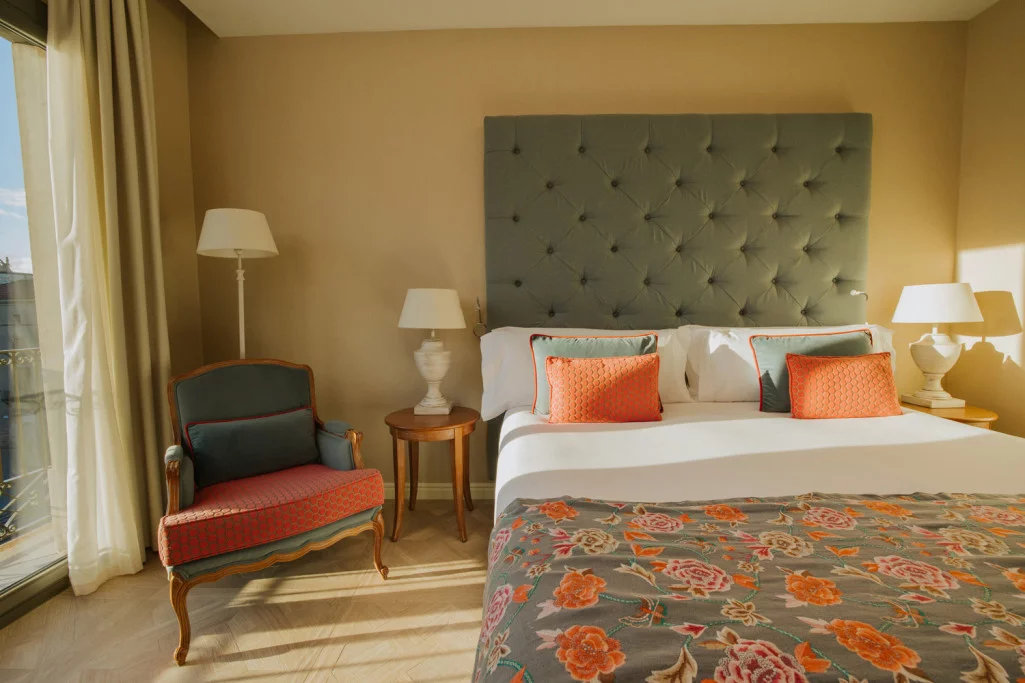
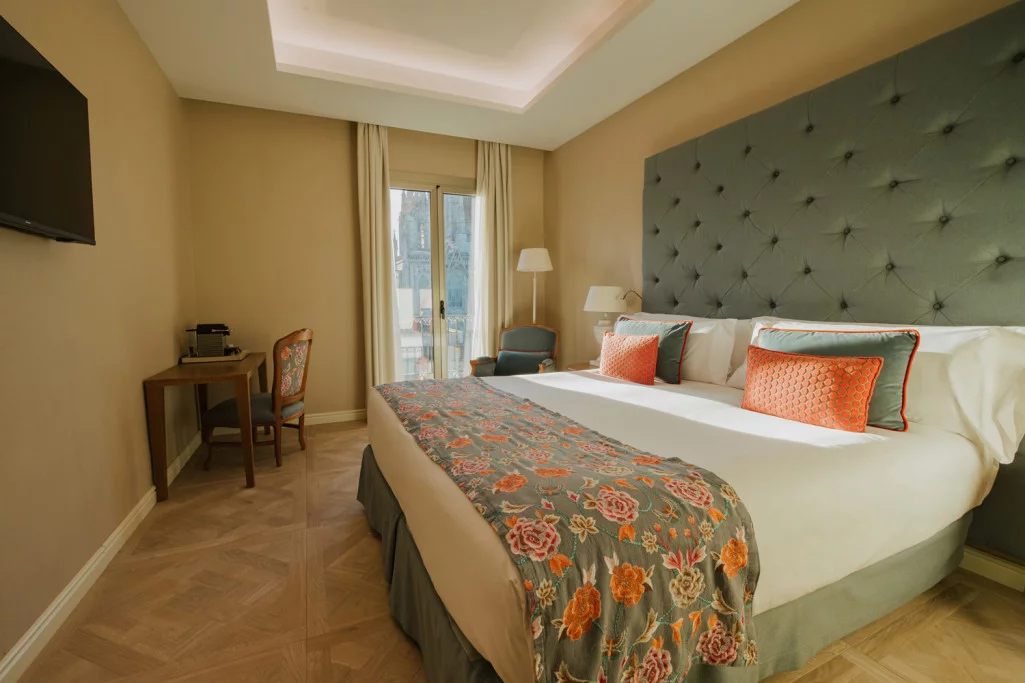
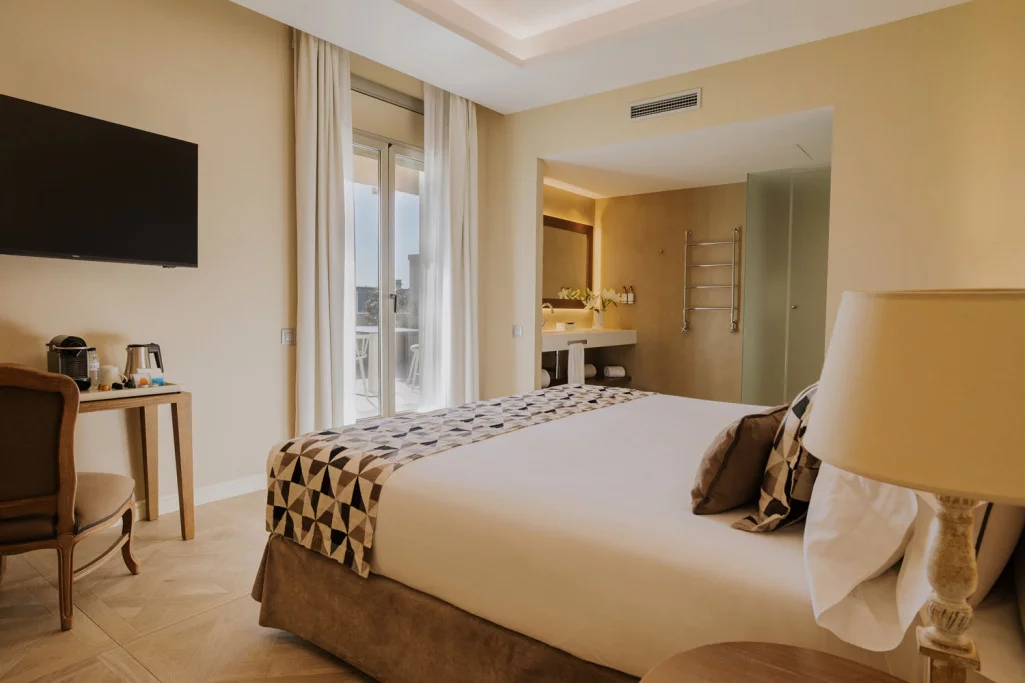
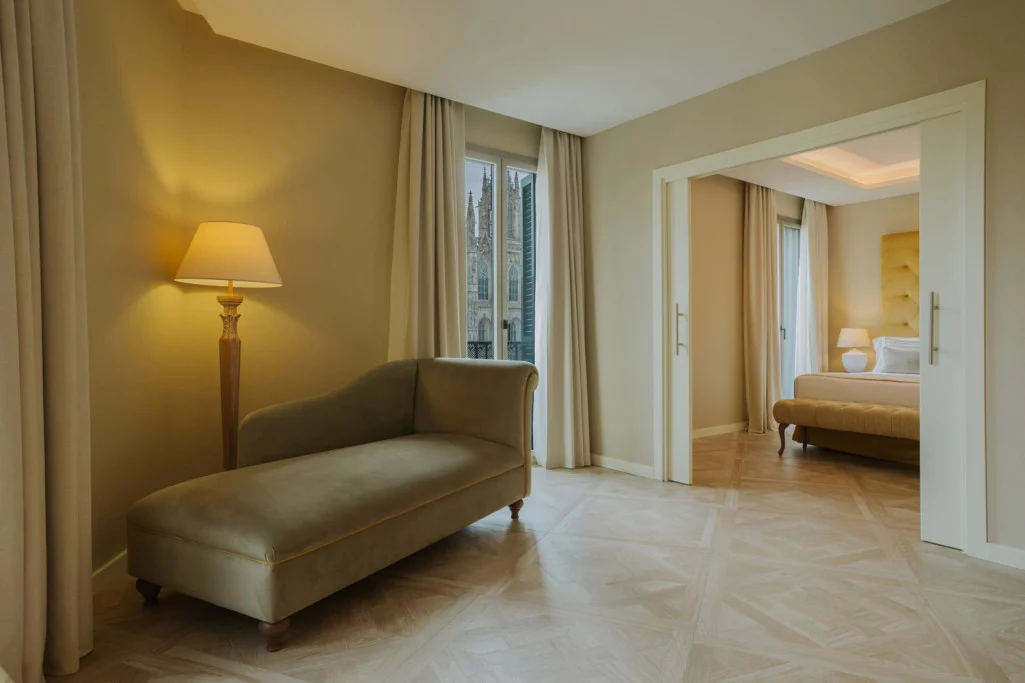
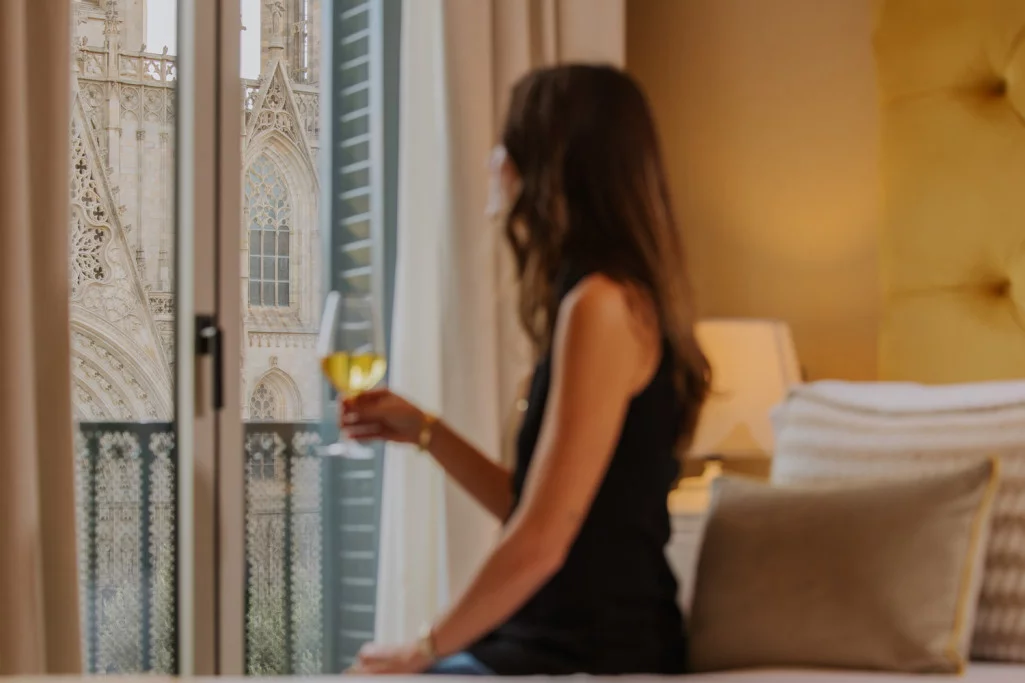
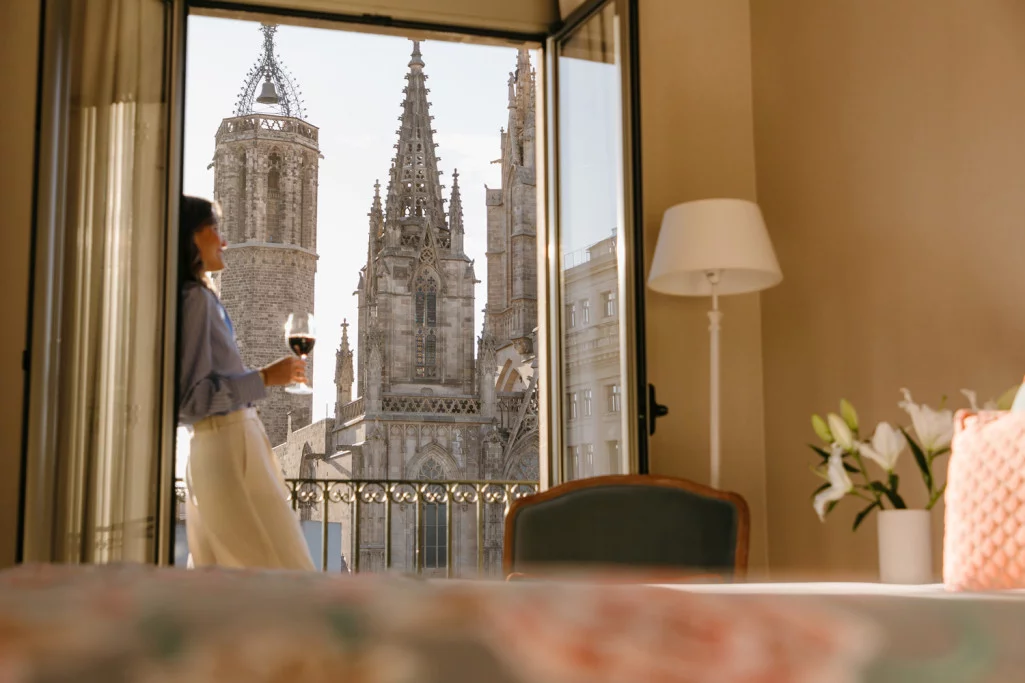
The Premium Suite offers 25 m² of space and comfort, ideal for 1 or 2 guests. With a private balcony and views of the Barcelona Cathedral, this room combines contemporary design, extra space, and a privileged location in the heart of the city.
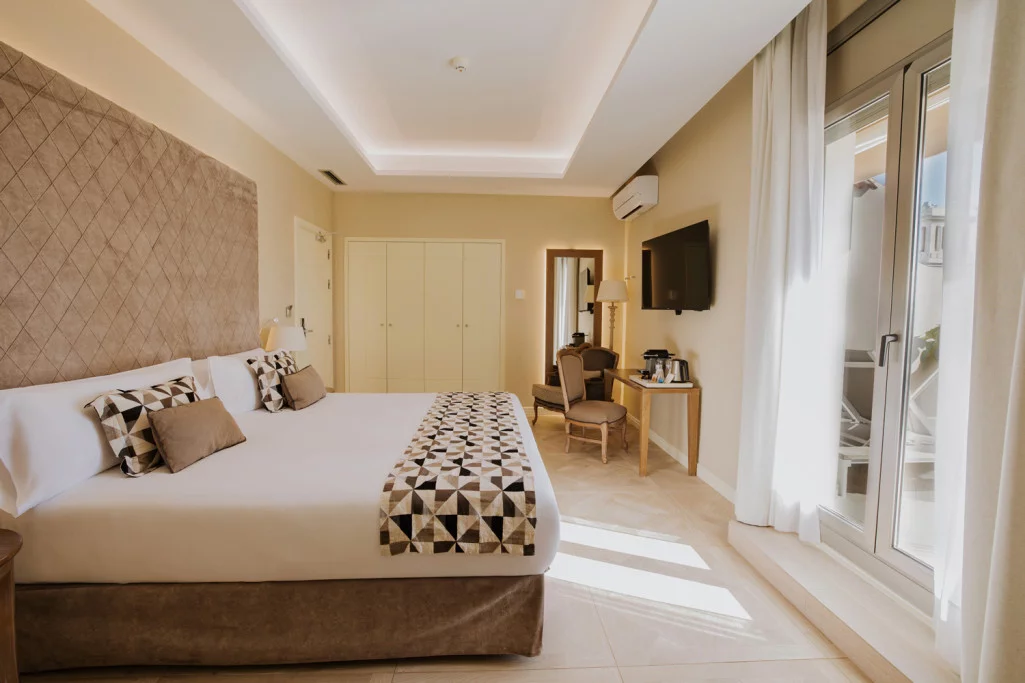
Skyline Suite
1 or 2 guests · terrace
The Skyline Penthouse offers 20 m² of interior space and a spacious private terrace of 27 m², ideal for 1 or 2 guests looking to enjoy Barcelona from above. Located on the upper level of the hotel, this room combines a comfortable interior with an exclusive outdoor space, perfect for relaxing and taking in the city in a calm and privileged setting.
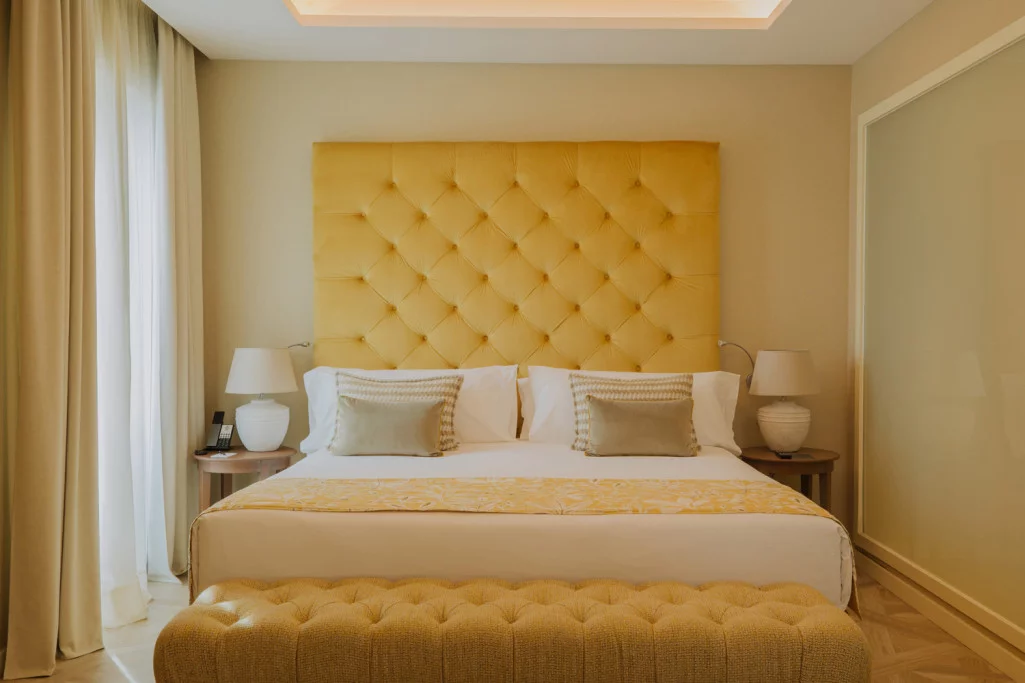
Grand Master Suite
4 guests · views · balcony
The Grand Master Suite is the largest and most exclusive suite at Lamaro Hotel. With 72 m² of space, it is designed to comfortably accommodate up to 4 guests (2 adults and 2 children up to 17 years old), offering an elegant and functional setting ideal for family stays or trips requiring extra space.
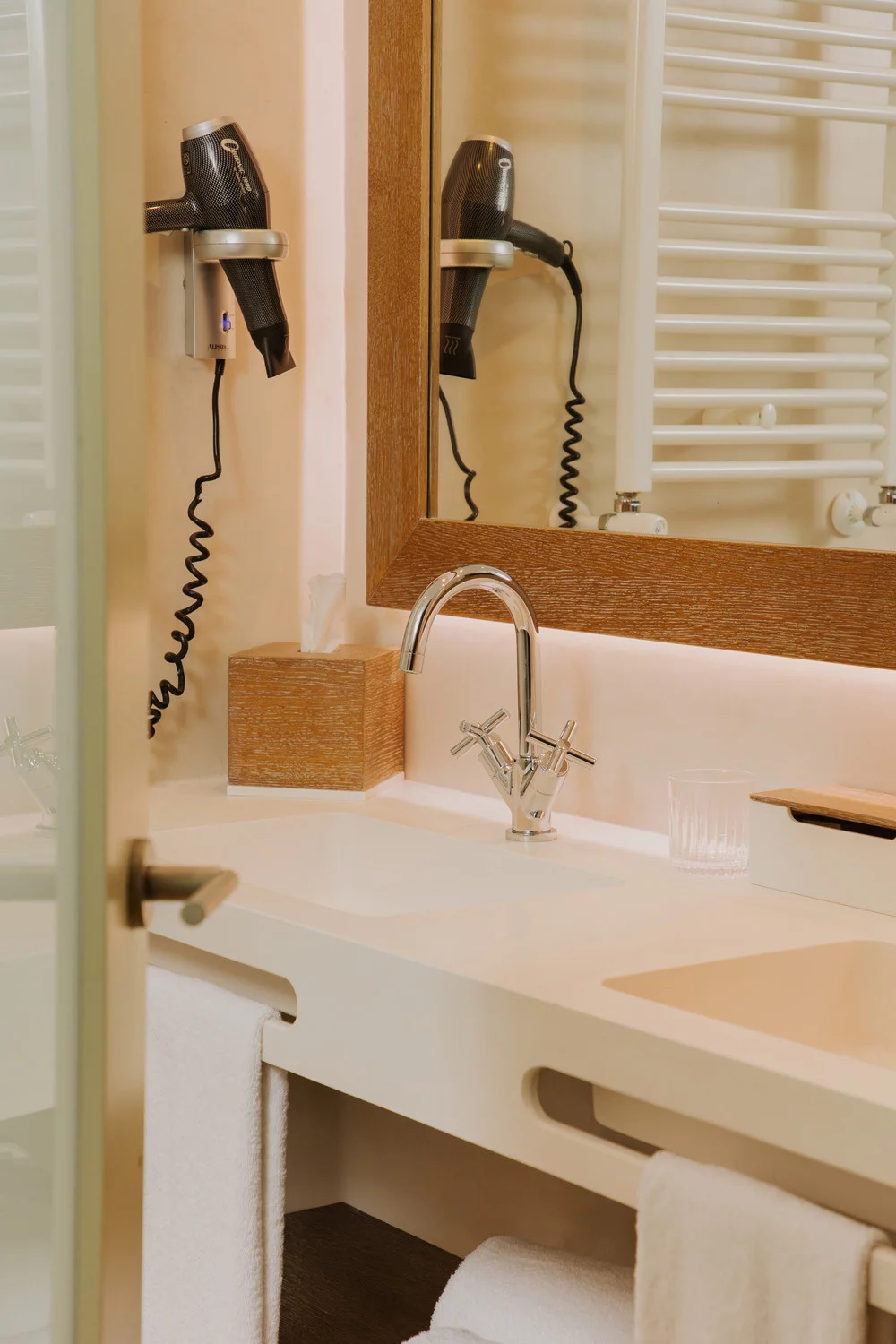
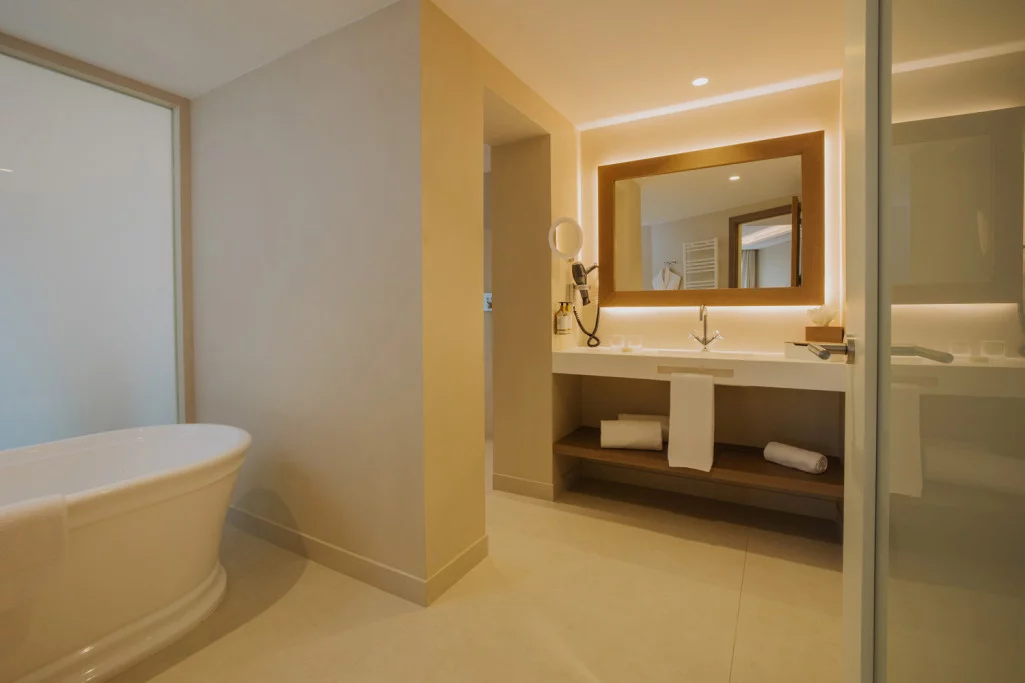
It features a King Size bed, a bathroom with both shower and bathtub, and two private balconies with views of the Barcelona Cathedral, providing natural light and a direct connection to the historic surroundings. A suite that combines space, comfort and the privileged location of Lamaro Hotel in the heart of Barcelona.