






.tmedium.png)
Barcelona’s gastronomy
A city that eats by season, by territory, by what the land offers this week
Why does Catalan cooking have a rhythm that doesn’t quite translate outside its borders? What rituals, markets and wines define how Barcelona actually eats? How does the plate change from one season to the next — and which ingredients mark each moment?
There are cities where you eat well. And there are cities where food has its own logic — an identity, a continuity between the ingredient, the season and the table. Barcelona is the second kind. Catalan cooking is not a cuisine of spectacle. It is a cuisine of conviction. It has its own rhythms, its own products and its own ways of sitting down to eat that resist easy explanation from the outside.
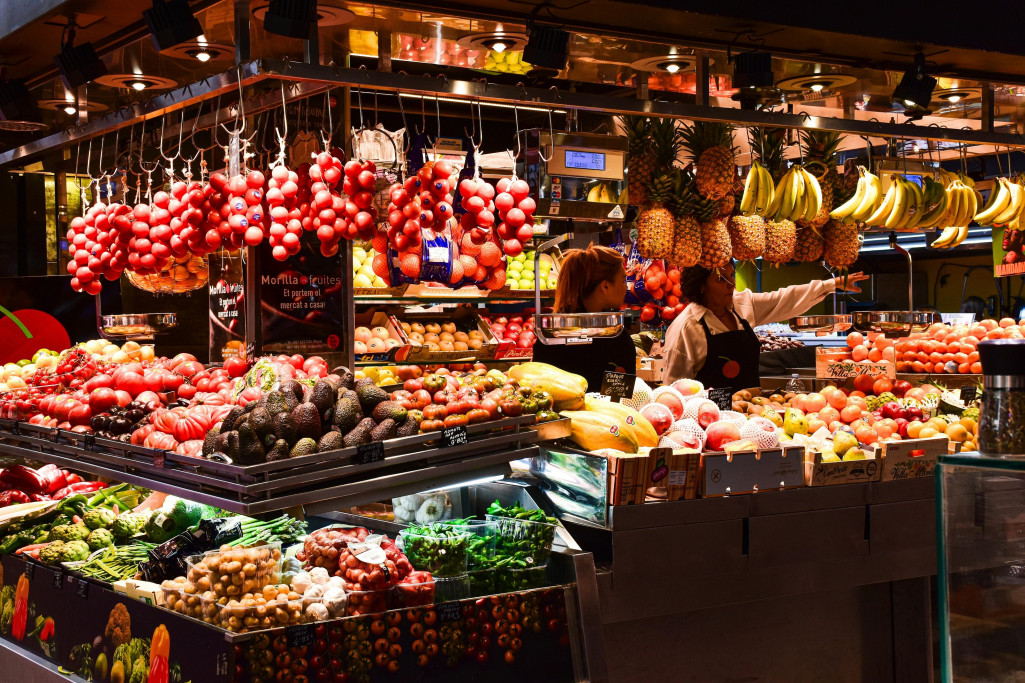
What makes Barcelona a first-order gastronomic destination is not its Michelin star count — though that count is significant — but something harder to manufacture: a daily culture of the table that runs from the market stall to the restaurant kitchen without losing the thread. The Mercat de la Boqueria, the Mercat de Santa Caterina and the Mercat de l’Abaceria are not tourist attractions. They are the nervous system of a city that still shops, cooks and eats by product and by season.
— In Barcelona, seasonality is not a marketing concept. It’s what’s on the market stall this week. —
Barcelona’s gastronomy
A city that eats by season, by territory, by what the land offers this week
Why does Catalan cooking have a rhythm that doesn’t quite translate outside its borders? What rituals, markets and wines define how Barcelona actually eats? How does the plate change from one season to the next — and which ingredients mark each moment?
There are cities where you eat well. And there are cities where food has its own logic — an identity, a continuity between the ingredient, the season and the table. Barcelona is the second kind. Catalan cooking is not a cuisine of spectacle. It is a cuisine of conviction. It has its own rhythms, its own products and its own ways of sitting down to eat that resist easy explanation from the outside.
What makes Barcelona a first-order gastronomic destination is not its Michelin star count — though that count is significant — but something harder to manufacture: a daily culture of the table that runs from the market stall to the restaurant kitchen without losing the thread. The Mercat de la Boqueria, the Mercat de Santa Caterina and the Mercat de l’Abaceria are not tourist attractions. They are the nervous system of a city that still shops, cooks and eats by product and by season.
— In Barcelona, seasonality is not a marketing concept. It’s what’s on the market stall this week. —
I. Catalan cooking: identity, technique and territory
Catalan cooking has a quality that sets it apart from other great Mediterranean traditions: the capacity to bring the sea and the mountains together in a single dish without either losing ground. The mar i muntanya — combinations where the iodine of shellfish meets the depth of meat in the same stew — is a proper technical category here, not an oddity. Squid with white beans from Santa Pau, rabbit with prawns, cuttlefish with meatballs: dishes with centuries of history that still appear on the menus of the city’s best restaurants.
Other elements define this kitchen’s character. The picada — a paste of nuts, fried bread, garlic and herbs that finishes and binds stews — is a technique that exists nowhere else in European cooking in quite the same form. The romesco — a sauce of dried pepper or ñora, almonds, hazelnuts, oil and garlic — is Catalonia’s great all-purpose condiment: as identifiable as it is versatile, as humble in its ingredients as it is complex in the result. And the sofregit — onion and tomato cooked very slowly until deeply concentrated — is the foundation of much of this cuisine’s braised tradition.
And then there is pa amb tomàquet: bread rubbed with ripe tomato, olive oil and salt. Not a tapa. Not a starter. The most honest way this city knows to begin any meal, and the one that best explains its relationship with ingredients: the tomato must taste like a tomato, the bread must have a crust, the oil must be from here. Three ingredients are enough to tell good from mediocre.
— One precise detail is worth more than a paragraph of adjectives. Pa amb tomàquet proves it every day. —
II. Rituals of the table: vermouth, the spoon breakfast and crema catalana
Barcelona has rituals of the table that appear in no Michelin guide but are as defining of the city as any starred restaurant.
Sunday vermouth is the first. Between noon and three in the afternoon, Barcelona practises vermouth as a social institution: a glass of red vermouth — preferably Catalan, from the Penedès or the Priorat — with olives, anchovies, patatas bravas or some tinned thing. It is not the aperitif that precedes something else. It is the thing itself. The pace is slow, the conversation is long, and the point is to arrive at lunch without hunger or hurry. The best vermouth bars are in Gràcia, the Born and Poble Sec. They are not signposted. You find them by going back.
The esmorzar de forquilla is the second ritual that most guides miss. In winter, the city eats hot in the morning: a bowl of escudella — Catalonia’s great winter stew, with vegetables, pulses, pork, veal, chicken and pasta — or a plate of garlic soup at one of the few kitchens that still serve it at opening time. It is a tradition retreating before coffee and toast, but in certain bars of the Gòtic and the old Eixample you can still find it if you know to ask.
And then there is crema catalana. Not crème brûlée — crema catalana. The difference is not one of name but of logic: the Catalan version is made with milk, not cream; it is scented with cinnamon and lemon zest; and the layer of burnt sugar on top is not a flourish but the reason the dish exists. The texture is lighter, the flavour more milky, the whole thing more restrained. It is one of the most imitated and least successfully replicated desserts in European cooking. The original has centuries of documented history in Catalonia.
III. The markets: where it all begins
Understanding Barcelona’s food culture begins with its markets — not as tourist stops, but as the real infrastructure of the city’s eating life. Barcelona has forty municipal markets in operation.
Mercat de la Boqueria — La Rambla, 91
The most famous market in Barcelona and one of the most visited in the world. It comes with a known trap: the stalls at the entrance are aimed at tourists, not at product. The real Boqueria is further in — in the vegetable stands, the butchers, the fishmongers who have been supplying the city’s cooks since six in the morning. To read it properly, arrive before ten.
Mercat de Santa Caterina — Av. de Francesc Cambó, 16
Four minutes on foot from Lamaro, the Mercat de Santa Caterina has something the Boqueria does not: quiet. The building, rebuilt by Enric Miralles and Benedetta Tagliabue with a ceramic mosaic roof that is one of the most singular architectural gestures in Barcelona of recent decades, houses a neighbourhood market that works with local produce. In spring, the stalls shift week by week: Maresme peas, asparagus, broad beans, the first artichokes from the Prat. In summer, tomatoes and peppers take over. In autumn, wild mushrooms. The market always tells you which season the city is in.
Mercat de l’Abaceria — Travessera de Gràcia, 186
To step off the tourist axis and see how the city shops when no one is watching. This Gràcia neighbourhood market is particularly strong on seasonal produce, preserved goods and spices. It is the market of people who already know what they are looking for.
IV. The rhythm of the year: season as ingredient
Barcelona’s food is not the same in January as in July. Each season has its product, its ritual and its logic at the table.
Winter (January–March): craft, depth and the calçotada
Winter is the season of craft. Menus grow denser: long stews, sauces built slowly, dishes that ask for quiet and a well-poured glass. Black truffle, at its best between January and February, appears with the discreet intensity that characterises the city’s best kitchens. It is also the season of escudella i carn d’olla — Catalonia’s defining winter stew, with pasta shells, vegetables, pulses, pork, veal and chicken — and of the most substantial mar i muntanya combinations: salt cod baked in tomato, stuffed squid, deep-stock fish noodle broth.
And in February and March comes the calçotada. The long, tender spring onion cooked directly on the embers until sweet and smoky, peeled with your hands and dipped in romesco. It is not just a dish: it is a midday ritual of fire, long conversation and a table with no fixed end time. One of the most essentially Catalan experiences that exists. The most prized varieties come from Valls, in the Camp de Tarragona. The romesco that accompanies them varies from kitchen to kitchen — dried pepper or ñora, almonds or hazelnuts, oil, garlic, tomato — and every cook defends their version as if it were doctrine.
Spring (April–May): precision and fine produce
Spring is the point of balance. Menus become cleaner and lighter, and the ingredient sets the terms.
The Maresme pea is the great product of this season: small, sweet, with a window of barely a few weeks, grown in the coastal farmland north of Barcelona. The garrofal variety — few peas per pod, harvested by hand — can reach €300 per kilo at its peak. That figure is not a marketing flourish: it reflects an artisanal growing process, a vanishingly brief season and a flavour with no real equivalent. When they disappear from the market stalls, spring is over. Tender broad beans from the Baix Llobregat, green asparagus and artichokes from the Prat — with their own Denomination of Origin — complete the picture. The Prat artichoke is especially singular: grown in the Llobregat delta on silty soils close to the sea, it has a texture and an absence of bitterness that sets it apart from any other variety. Grilled with oil and salt, or sautéed with clams or prawns.
Summer (June–August): the Mediterranean at its most essential
Summer pushes the cooking towards its most radical simplicity: the ingredient asks for minimum intervention and maximum honesty. It is the season that most clearly separates cooks who work with conviction from those who work with noise.
The Catalan summer tomato — especially the tomàquet de penjar, the variety hung and slowly dried on the farmhouse wall — is the simplest and hardest ingredient to equal. Rubbed onto bread with oil from the Empordà or the Baix Ebre, it produces pa amb tomàquet in its most elemental and most definitive form. Roasted piquillo pepper, aubergine cooked in embers, Padrón peppers on a griddle: the grill and the open flame are the techniques of the Catalan summer. No sauce improves what the fire has already done.
Seasonal fish and shellfish arrive at their best: the red prawn from Palamós, between June and October, has a texture and concentration of flavour that make any preparation beyond a flat griddle and coarse salt unnecessary. The suquet de peix — a fisherman’s stew of rock fish with potato, garlic, parsley and picada — is the most honest summer dish on the Catalan coast. The fideuà — the noodle version of rice a banda, cooked in a clay dish with fish stock and finished with alioli — is the great contribution of the Valencian-Catalan coast to Mediterranean summer cooking.
And the desserts of summer are the fruit: vineyard peaches from the Baix Penedès, cherries from the Garraf and the Baix Empordà, apricots from the Pla de l’Estany. Fruit that needs nothing more than a knife.
Autumn (September–November): harvest, wild mushrooms and depth
Autumn is the great return of appetite. The temperature drops and the menus grow substantial again.
Wild mushrooms mark the beginning of the season with near-meteorological precision. The rovellon — Catalan pine milk cap, a deep orange — arrives first after the initial September rains. Ceps — porcini — follow, with greater depth and greater price. Llenegues, fredolics, trompetes de la mort: each variety has its moment, its texture and its correct preparation. The best kitchens in the city chalk up on the board what arrived from the market that morning. It is one of the few ways Barcelona eats with real urgency: what is there today will not be there tomorrow.
September is also the month of the verema — the harvest — and the most meaningful moment for those who travel with wine as their axis. The D.O. Alella, twenty minutes from Barcelona, has its Pansa Blanca vineyards a few kilometres from the sea. The Penedès celebrates harvest with the first new must. And in October, Sant Sadurní d’Anoia — the capital of cava — holds its great annual gathering of Catalan sparkling wine.
— Wild mushrooms are one of the few ways Barcelona eats with real urgency: what is there today will not be there tomorrow. —
V. Cava and wine: Catalonia as a wine territory
Catalonia has more Denominations of Origin for wine than any other autonomous community in Spain. Ten in total, from the coast to the interior, with radically different characters between them.
The Priorat deserves particular mention. Its llicorelles — dark slate soils that concentrate heat and hold moisture — give the wines a minerality and density found nowhere else in the world. The D.O.Q. Priorat and the surrounding D.O. Montsant produce some of the most singular red wines in Europe. They are wines that need time — in bottle and in glass — and that reward patience with a complexity few regions anywhere can offer.
The Penedès, less than an hour from Barcelona, is the birthplace of cava and the territory of a new generation of whites and reds that owe nothing to the obvious names. Cava — made by traditional method from native varieties including Macabeu, Xarel·lo and Parellada — is one of the great sparkling wines of the world that fashion has been slow to recognise. The best reserva and gran reserva cavas compete without apology alongside the most celebrated champagnes. The difference is in the soil and the grape. The result is in the glass.
On the wine list of any serious Barcelona restaurant, Catalan wines share space with Rioja, Ribera del Duero and the great international producers. Barcelona’s wine culture is comfortable with the mix: there is no dogma of origin, only a standard of quality.
— The finest Catalan cava competes with the world’s great sparkling wines. The difference is in the soil and the grape. The result is in the glass. —
VI. Lamaro and the food: where to start
The Mercat de Santa Caterina is four minutes on foot from Lamaro. The Born — the neighbourhood with the highest concentration of serious Catalan restaurants in the city — is eight. Both reachable on foot, without transport, from the Avinguda de la Catedral.
On the ground floor of the hotel, restaurant Catedral 1951 works with seasonal Catalan produce. The menu combines dishes rooted in the Mediterranean tradition — bacallà amb tomàquet confitat, seafood fideuà, squid with Santa Pau white beans — with references to the deeper culinary canon: Prat artichokes with clams, free-range chicken caneló au gratin, crema catalana with carquinyolis. The wine list moves through the Catalan denominations with clear criteria: Priorat, Montsant, Penedès, Costers del Segre. The daily menu — €40 including bread, water and a glass of wine — changes every month following the available seasonal produce.
View our menu · Seasonal daily menu · Reserve a table
The Lamaro team knows the neighbourhood’s food scene — and the city’s — with the same depth it brings to architecture or music. For guests with a direct booking, we put together a personalised selection based on season, interest — produce, wine, market experience, avant-garde cooking — and how much lead time is needed. Some restaurants in Barcelona book up weeks in advance. Ask before you arrive.
— The best food in Barcelona is not on any list. It is on the market stall this week, at the bar with no sign and on the menu the cook wrote this morning. —
Three events worth marking in the calendar
Temps de Pèsols — Comarca del Maresme
Mid-March – late April (2027: dates indicative based on previous editions)
Each spring, 21 municipalities across the Maresme comarca open their kitchens to the garrofal pea — the most singular product in the Catalan calendar. For six weeks, restaurants, producers and local markets organise tasting menus, farm visits and events built around this ingredient with a window of just a few weeks. It is one of the few gastronomic experiences in Catalonia that exists only in one place and only at one time of year. Booking ahead at participating restaurants is strongly advised.
Comarca del Maresme — 35 min by taxi from Lamaro — turismemaresme.cat
Festa de la Verema d’Alella — Alella, D.O. Alella
3–9 September 2026
During the first week of September, the village of Alella celebrates its harvest with guided winery visits, tastings of D.O. Alella wines and cavas, a producers’ market and paired tasting events. The Wine and Gastronomy Show — which brings together all the denomination’s producers — is the central event. The D.O. Alella is one of Catalonia’s smallest and oldest wine denominations, with Pansa Blanca vineyards a few kilometres from the sea. Ticketed activities sell out within days of going on sale.
Plaça de l’Ajuntament, 1 — Alella — 25 min by taxi from Lamaro — festaverema.alella.cat
Gastronomic Forum Barcelona — Recinto Gran Via, L’Hospitalet
2–4 November 2026
Catalonia’s largest annual gathering of food professionals. Three days of talks, showcookings and tastings with the most relevant names in Catalan and international cooking. The 2026 edition moves to a new venue at the Fira de Barcelona’s Gran Via site. Open to the general public as well as trade visitors.
Av. Joan Carles I, 64 — L’Hospitalet de Llobregat — 20 min by taxi from Lamaro — gastronomicforumbarcelona.com
Calendar: Food and Wine in Barcelona 2026–2027
The most relevant events in Barcelona’s food and wine calendar for the coming months:
* 2027 dates are indicative based on previous editions. Check official websites for confirmation.
Lamaro as a starting point: distances to markets and food neighbourhoods
The hotel’s position on the Avinguda de la Catedral puts much of the city’s food circuit within walking distance.
Walking times estimated at normal pace (5 km/h). Taxi with normal urban traffic.
Restaurant Catedral 1951 at Lamaro Hotel works with seasonal Catalan produce. For reservations and personalised food recommendations, guests with a direct booking are welcome to consult with the hotel team before arrival.
우리와 함께 이점으로 예약하세요
-

최고 가격 보장
-

환불 불가 요금에는 취소 보험이 포함되어 있습니다.
-

얼리 체크인 / 레이트 체크아웃
(가능 여부에 따라 다름) -

무료 주차
-

저희 레스토랑 카테드랄 1951
에서 15% 할인 (점심 또는 저녁 식사 시 최소 30유로 이상 주문 가능)