


.tmedium.png)
Design and Craft in Barcelona
¿Qué hace de Barcelona una referencia mundial en diseño y oficios artesanales? ¿Dónde están los talleres que no aparecen en ninguna guía? ¿Por qué objetos diseñados en Barcelona se siguen produciendo setenta años después?
Hay ciudades donde el diseño es una industria de exportación. En Barcelona el diseño es una consecuencia lógica de cómo esta ciudad lleva siglos relacionándose con los objetos: con exigencia, con oficio y con una idea muy precisa de que la forma y la función no son enemigos. Los gremios medievales del Gótico, el Modernismo como proyecto de diseño total, la generación de diseñadores industriales que en los años cincuenta y sesenta redefinió los objetos cotidianos de España, y los estudios del 22@ que hoy exportan identidad visual a todo el mundo: no son capítulos distintos. Son el mismo argumento, contado en épocas distintas, desde la misma ciudad.
Barcelona no imitó a Milán. Construyó su propia genealogía.
— En Barcelona, el oficio no es nostalgia. Es el punto de partida de todo lo que vino después. —
Design and Craft in Barcelona
¿Qué hace de Barcelona una referencia mundial en diseño y oficios artesanales? ¿Dónde están los talleres que no aparecen en ninguna guía? ¿Por qué objetos diseñados en Barcelona se siguen produciendo setenta años después?
Hay ciudades donde el diseño es una industria de exportación. En Barcelona el diseño es una consecuencia lógica de cómo esta ciudad lleva siglos relacionándose con los objetos: con exigencia, con oficio y con una idea muy precisa de que la forma y la función no son enemigos. Los gremios medievales del Gótico, el Modernismo como proyecto de diseño total, la generación de diseñadores industriales que en los años cincuenta y sesenta redefinió los objetos cotidianos de España, y los estudios del 22@ que hoy exportan identidad visual a todo el mundo: no son capítulos distintos. Son el mismo argumento, contado en épocas distintas, desde la misma ciudad.
Barcelona no imitó a Milán. Construyó su propia genealogía.
— En Barcelona, el oficio no es nostalgia. Es el punto de partida de todo lo que vino después. —
I. The guilds: Europe's first creative district
The Gothic Quarter is not only medieval architecture. It is Barcelona's first organised production district, and one of the oldest in Europe. From the thirteenth century, guilds structured the economic and social life of the city by trade: every street, every alley, every square had its own speciality and identity. Silversmiths in the carrer dels Argenters. Shoemakers in the carrer dels Cotoners. Barrel makers in the carrer dels Boters. Swordsmiths in the carrer dels Espasers. Basket weavers, wax chandlers, tanners — each trade with its own ordinances, its patron saint and its own chapel.
This guild system was not merely a way of organising production. It was a pedagogy of craft: an apprentice spent years in the workshop before being allowed to sign his own work. The master answered to the guild for every piece that left his hands. The city consumed and watched. The result was a standard of quality sustained over centuries that no industrial system since has been able to fully replicate.
Some of those workshops have been in the same location for decades — or generations. The Barri Gòtic, the Born and all of Ciutat Vella preserve today a concentration of working artisans that in any other European city would have disappeared long ago: jewellers, basket weavers, shoemakers who make custom espadrilles, leather workers, herb distillers, producers of artisan olive oil from the Catalan landscape.
— The street names of the Gothic Quarter are the map of Barcelona's first design system. —
II. Modernisme as total design
At the end of the nineteenth century, Catalan Modernisme put forward something that few architectural movements have sustained with such coherence: that there could be no separation between architecture, furniture, ceramics, stained glass, jewellery and ornamentation. Everything was part of the same project. The distinction between fine art and applied art was, for the architects and craftsmen of Modernisme, a false one.
Gaudí did not commission the surface finishes of his buildings from external suppliers: he conceived them as part of the structural logic. The trencadís technique — fragments of ceramic and glass assembled as an irregular mosaic — is the most visible proof of a way of thinking in which residual material becomes ornamental system with its own coherence. In Park Güell, Casa Batlló or the Palau Güell, design does not decorate the architecture. It is the architecture.
The Palau de la Música Catalana by Domènech i Montaner is a building where ceramics, wrought iron, leaded glass and sculpture function as an integrated visual score: no element is ornamental in the strict sense, because all carry the same logic. In the Recinte Modernista de Sant Pau, the pavilions decorated with mosaics and bas-reliefs were part of an explicit therapeutic concept: beauty as a condition of treatment. It was not decoration. It was programme.
The most accessible legacy of this total design is the objects of the period: tilework, lamps, furniture, tableware, jewellery, textiles. The Museu del Disseny (Plaça de les Glòries Catalanes, 37-38) holds thousands of pieces in its permanent collections, alongside medieval textiles, five centuries of fashion and twentieth-century graphic design.
— Gaudí did not apply ornamentation to architecture. He made ornamentation become architecture. —
III. The Barcelona Chair, the Cruet oil pourer and the objects that changed the century
In 1929, for the International Exhibition of Barcelona, Ludwig Mies van der Rohe designed two objects that would define the aesthetic of the twentieth century: the German Pavilion — reconstructed in 1986 on the same site at Montjuïc and today one of the most studied buildings in the world — and the Barcelona Chair. A seat of stainless steel and leather that Mies conceived specifically so that the King and Queen of Spain could sit with dignity in that space of perfect proportions. The Barcelona Chair has been in continuous production for almost a hundred years. It is one of the most copied and most recognisable design objects on the planet. It was born in Barcelona.
Thirty years later, the city produced its own generation of industrial designers who thought about objects from the perspective of function and a very specific Mediterranean elegance: not ostentatious luxury, but formal correctness. The object that does what it is meant to do, and that can also be looked at without discomfort.
André Ricard — National Design Award, Prince of Asturias Award, one of the first four presidents of ICSID — is the central figure of that generation. He designed the Olympic torch for Barcelona 92, among hundreds of other objects. But perhaps his most influential and least known piece is the Cruet oil pourer, designed in 1961: a glass oil bottle with a spout engineered to pour without dripping, which solved an everyday problem that had existed for centuries with a solution so clean it seems obvious. It has been in production for over sixty years. That is the measure of good design: when you see it, it looks as if it was always there.
Miquel Milà designed the TMC lamp in 1958. Seventy years later it is still in production. Two words are enough to explain why: it works perfectly.
— The Barcelona Chair, the Cruet oil pourer, the TMC lamp. Three objects designed in Barcelona that the world has been using for decades without knowing where they come from. —
IV. Graphic design and the '92 Games as a project
There is a moment when Barcelona became a world reference in graphic design and visual identity: the 1992 Olympic Games. The corporate image of Barcelona 92 — the pictograms designed by Josep M. Trias, the logotype lettering, the venue signage, the design of the Cobi mascot by Javier Mariscal — was an exercise in visual coherence at a scale few cities in the world have matched before or since. Everything communicated in the same language. Everything was unmistakably from Barcelona.
That generation of graphic designers created a school that has its continuity today in studios such as Mucho, Hey Studio, Toormix, Folch Studio and Clase bcn — some of the most recognised visual identity studios in Europe, all based in Barcelona, all exporting work to brands worldwide.
The Museu del Disseny houses the permanent exhibition Dissenyes o treballes? La nova comunicació visual 1980–2003, dedicated to this foundational period. And the exhibition Seny i Rauxa. Notícia de l'arquitectura catalana, on view from May to September 2026, charts the legacy of the ETSAB — the Barcelona School of Architecture, which celebrates its 150th anniversary — with a critical perspective that includes its influence on the city's industrial and graphic design.
— The pictograms of Barcelona 92 defined how the entire world pictures the Olympic Games to this day. —
V. Poblenou: when design moved into the factory
The Poblenou neighbourhood was for over a century the industrial engine of Barcelona. The textile factories, the printing houses, the mechanical workshops that powered the city's economy were concentrated here, in a dense fabric of warehouses, chimneys and workers' housing between the Eixample and the sea. They called it the Catalan Manchester. When industry left, the warehouses stayed. And into them came design studios, galleries, creative schools, audiovisual production spaces.
The 22@ Plan of 2000 formalised what was already happening: the conversion of the old industrial district into a technology and creative hub. Today Poblenou is one of the most active design ecosystems in Europe. Schools such as BAU, LCI Barcelona and ELISAVA are training the next generation of designers a few metres from where the fabrics that dressed Catalonia for a century were made.
Each year, the Poblenou Open Day opens more than fifty spaces for twelve hours: galleries, studios, design schools, artists' workshops, audiovisual production companies. It is not a trade fair. It is an open-doors day where you step into the spaces where things are created, talk to the people who create them and understand where what later appears in shops, screens and streets around the world actually comes from.
— Poblenou is what happens when a city does not demolish its factories but turns them into the next chapter. —
VI. The FAD and the Barcelona Design Week: the scene that never stops
The Foment de les Arts i el Disseny — FAD — is the institution that since 1903 has articulated Barcelona's design scene. Its annual awards are the oldest and most respected measure of quality in design, architecture and interiorism in Spain. The Premis FAD d'Arquitectura i Interiorisme — in their 68th edition — are presented on 17 June 2026 at the Disseny Hub Barcelona. The Premis Delta, which recognise excellence in industrial design and in 2026 recover their historic name after several editions as the Premis ADI, are presented on 22 July at the same venue.
In October, the Barcelona Design Week turns the city for several days into a laboratory of debate and exhibition: talks, shows, installations in public space and open studios. For anyone who wants to understand the state of Barcelona design in a single weekend, it is the most concentrated moment of the year. Not the most publicised. The most real.
VII. Lamaro as a starting point: the tour that begins on the rooftop
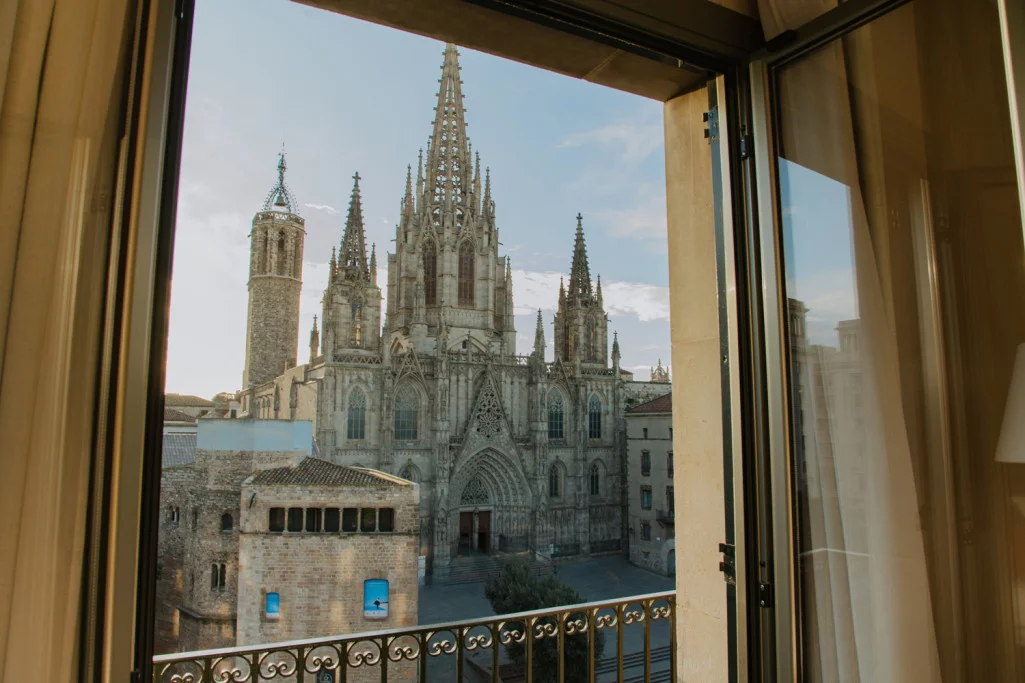
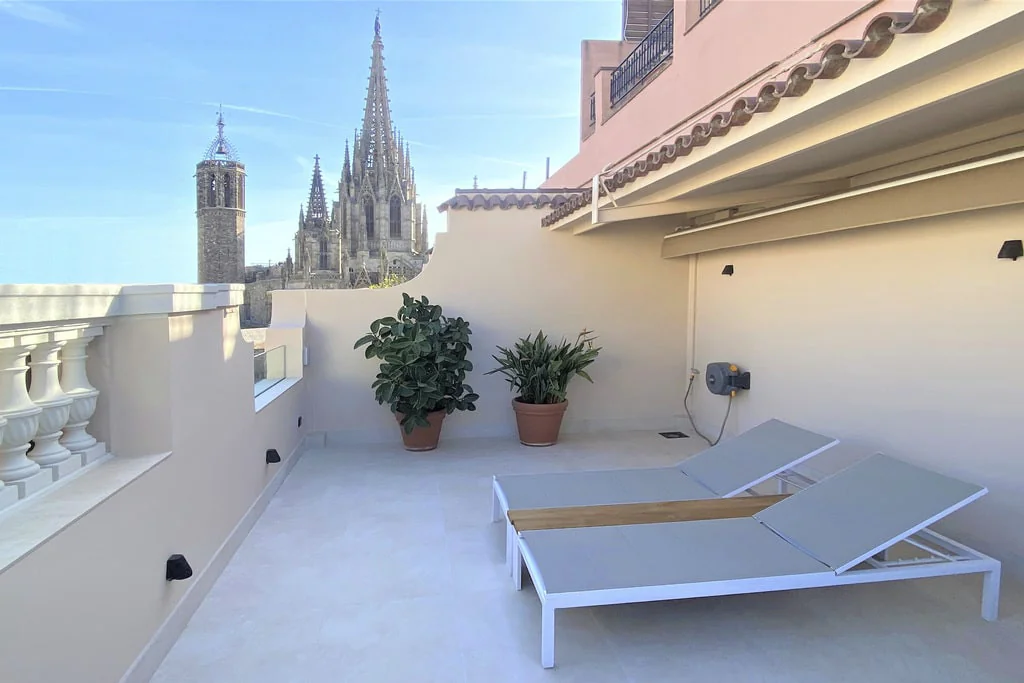
The rooftop L'Àtic offers one of the most iconic views in Barcelona. From here, the Cathedral feels almost within reach, while the medieval street patterns below reveal the evolution of Barcino into today's Gothic Quarter.
From June 2026, Lamaro launches exclusively for guests with direct bookings the Lamaro Curated Stays Design & Craft Tour, created in collaboration with DesignTours. The tour begins at L'Àtic with a glass of cava or a coffee while mapping out the route from above. Many of the streets visible from here still carry the names of the medieval guilds that once worked there: Boters (barrel makers), Sabaters (shoemakers), Espasers (swordsmiths), Argenters (silversmiths).
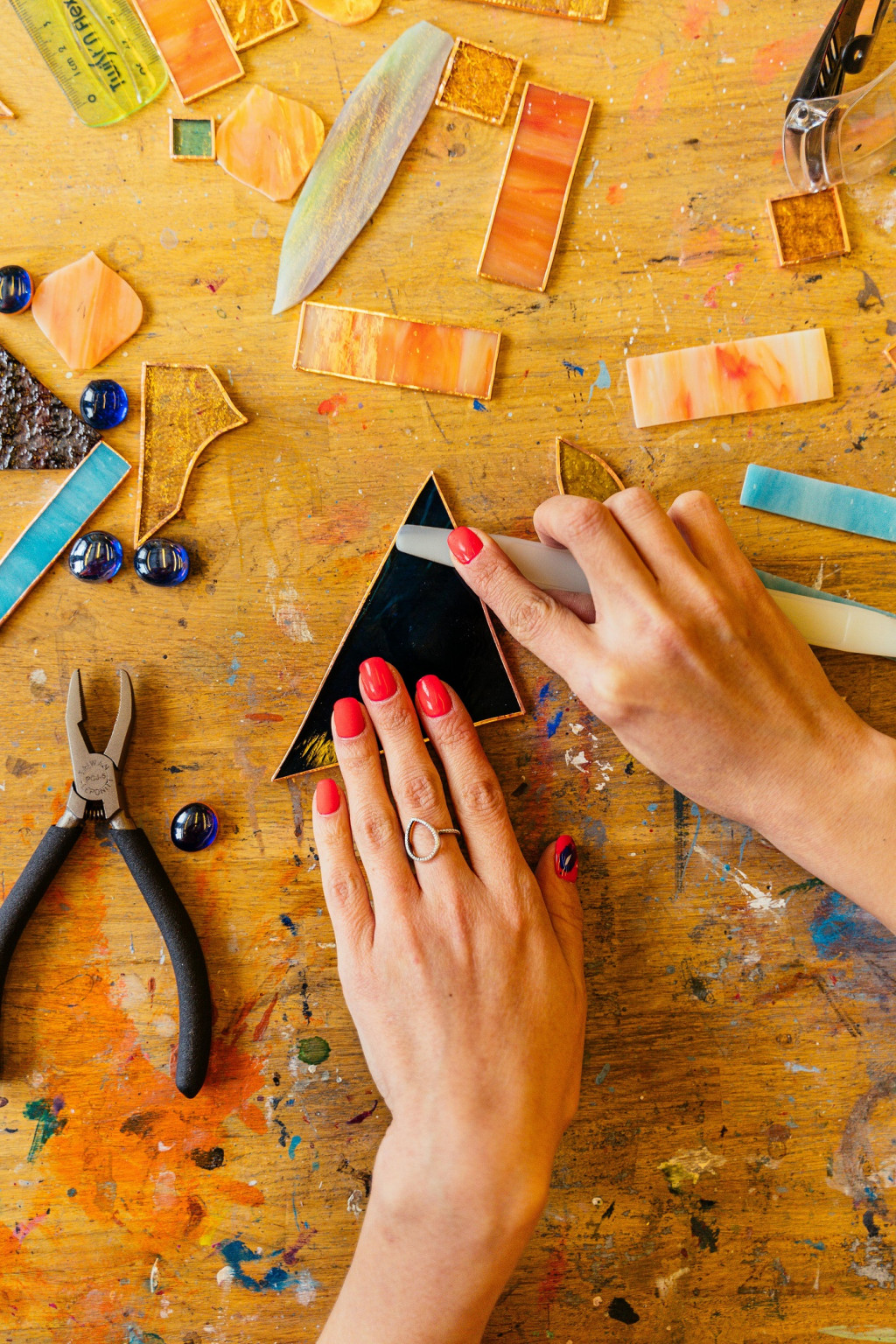
From there, the tour heads into the neighbourhood itself. Along the way, a carefully selected group of shops and ateliers are visited and guests meet the artisans who continue Barcelona's long tradition of craft: jewellery, basket weaving, custom espadrilles, bespoke leather goods. For those with culinary interests, the tour also includes stops featuring artisanal olive oils, herbal infusions and other gourmet products sourced from the Catalan landscape.
The tour lasts approximately two and a half hours and covers less than two kilometres at a relaxed pace. By the end, guests have a deeper understanding of why Barcelona is so widely recognised for its design and craft culture. And quite possibly have found something unique to take back home.
— Lamaro is not near Barcelona's design culture. It is inside its first layer. —
What's on: Design & Craft in Barcelona 2026
The most relevant events in Barcelona's design and craft calendar for the coming months:
Dates confirmed except Barcelona Design Week, which is indicative based on previous editions. Please verify on each institution's website before your visit.
Lamaro as a starting point: distances to key venues
The hotel's position on the Avinguda de la Catedral places much of the city's design and craft circuit within walking distance.
Walking times estimated at normal pace (5 km/h). Taxi times with normal urban traffic.
私たちと一緒に特典付きで予約してください。
-

最安値保証
-

柔軟な条件
-

アーリーチェックイン / レイトチェックアウト
空き状況により) -

無料駐車場
-

ミニバー初回補充無料
Your starting point for Barcelona's design and craft scene
- テラスまたはバルコニー付き
- 大聖堂の眺め
- スイート
- トリプルとファミリー

プレミアムスイート
1または2人の宿泊者 · サイト · バルコニー
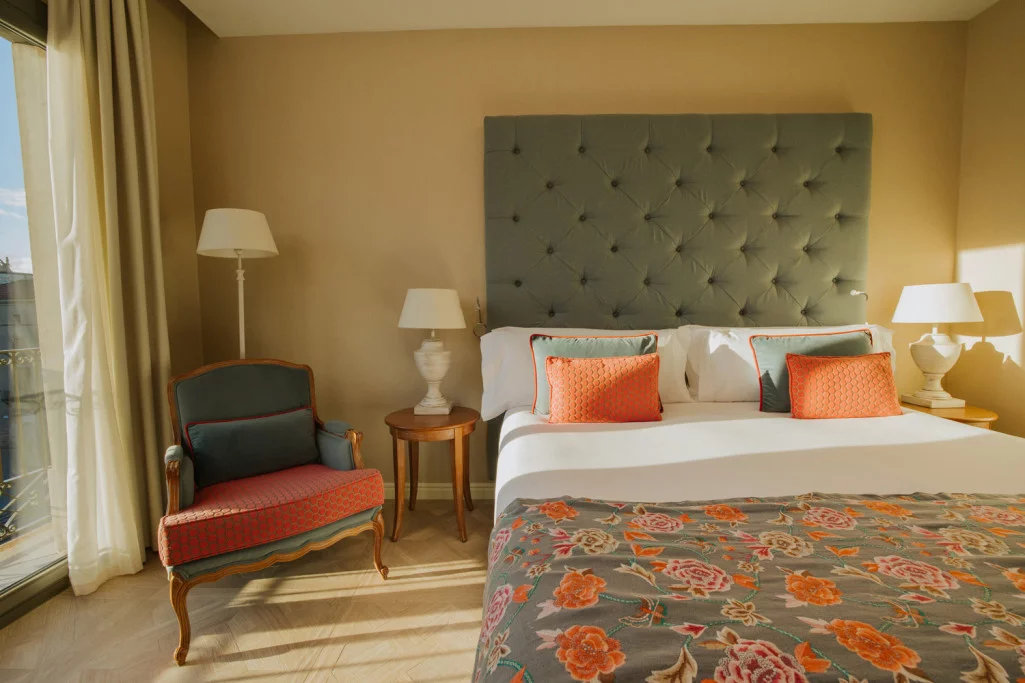
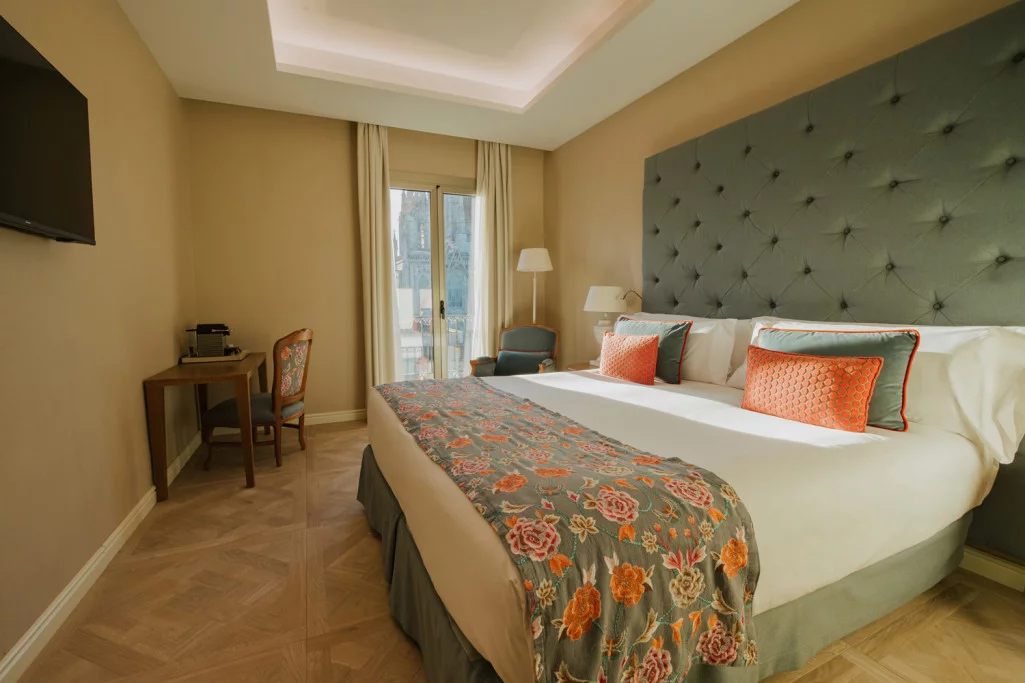
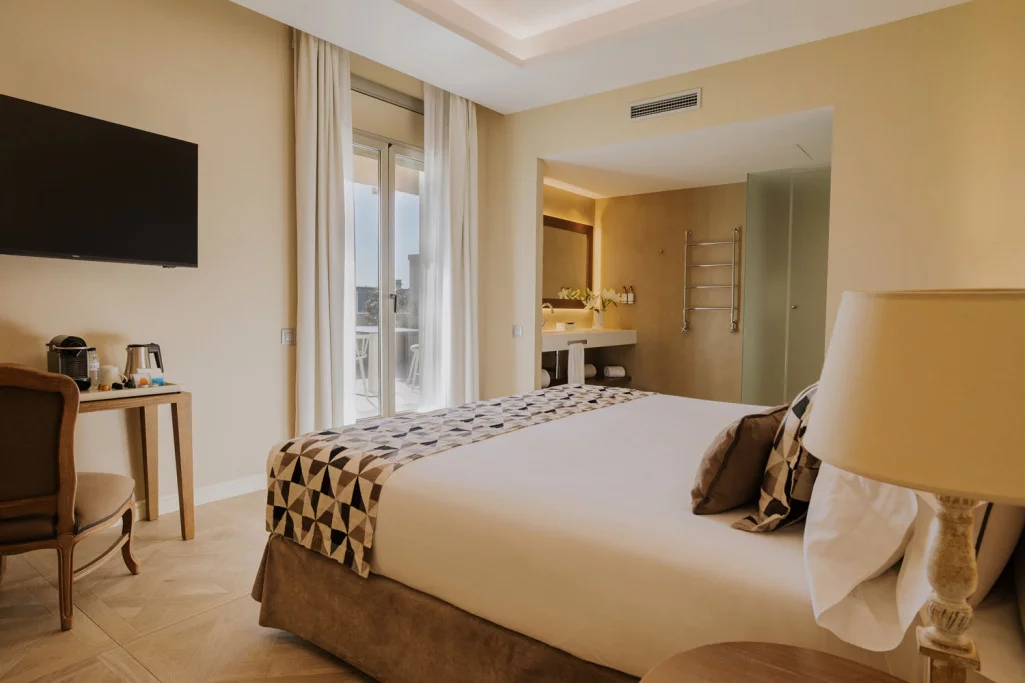
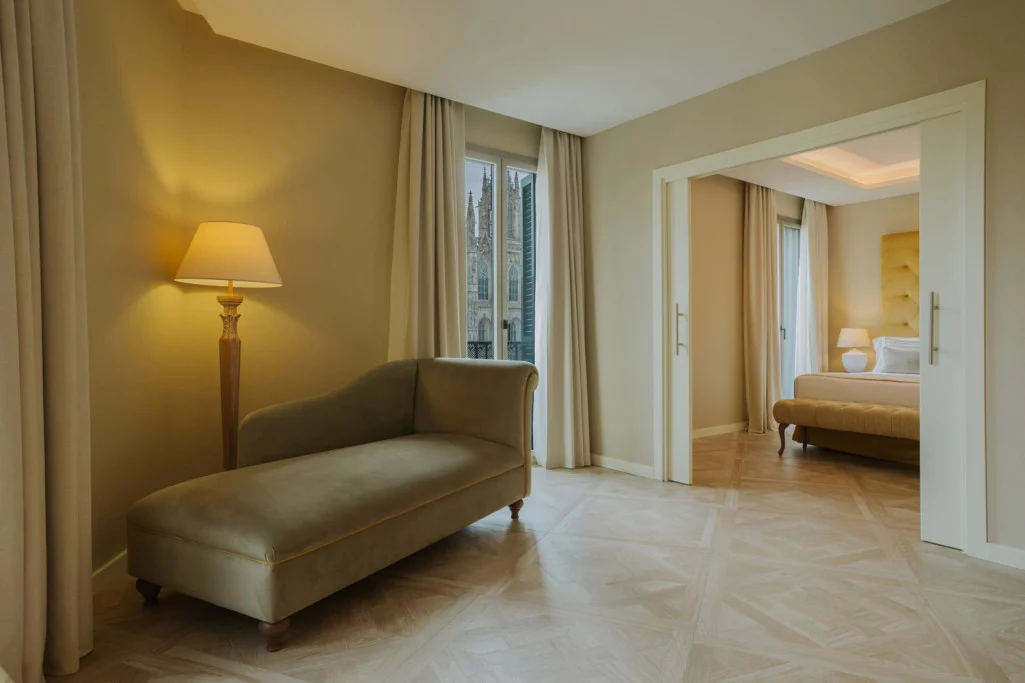
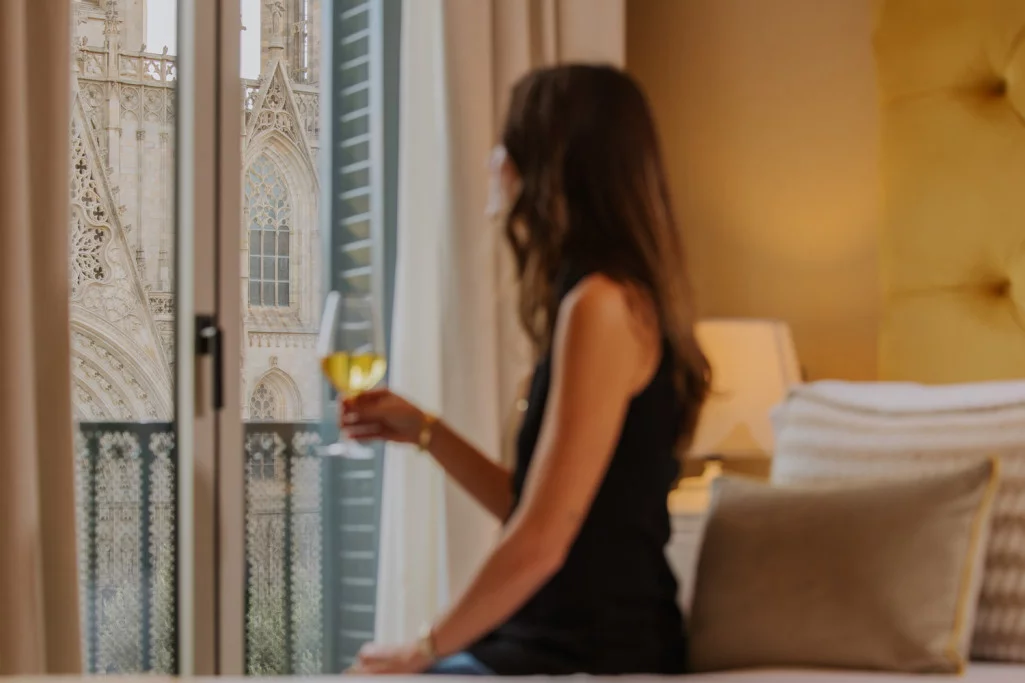
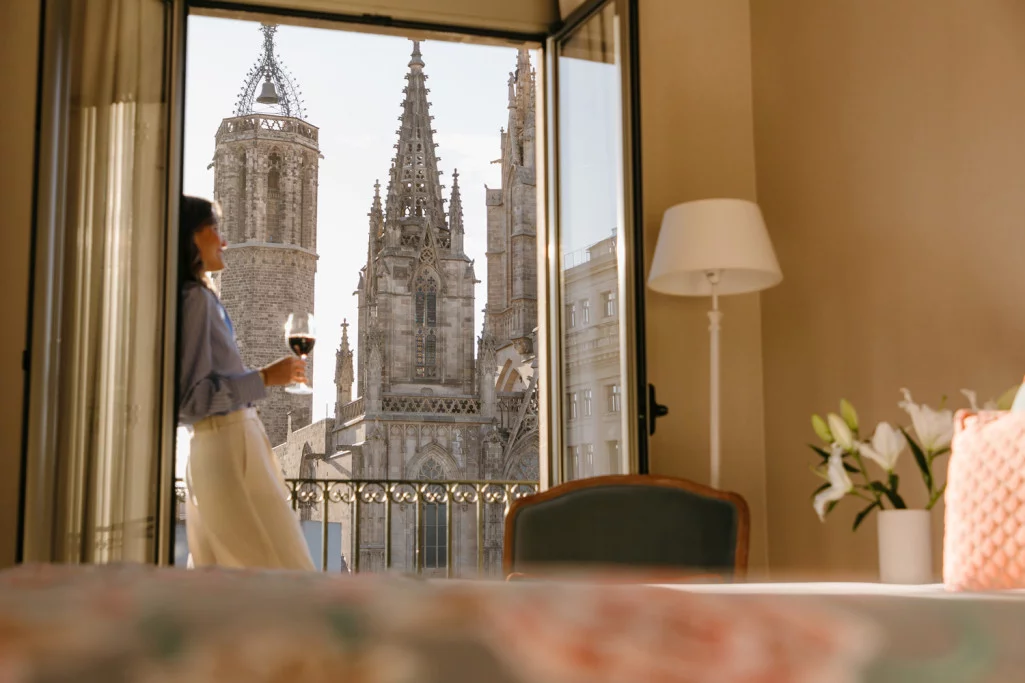
プレミアムスイートは、デザイン、快適さ、そしてバルセロナ大聖堂を望む特別な景観を兼ね備えています。25㎡の広さで1~2名様にご利用いただけるこのスイートは、専用バルコニーから忘れられない体験をお楽しみいただけます。街を代表する象徴の一つを眺めることができます。
Design & Craftツアーは直接予約(当ホテルのウェブサイト、電話、またはメールでのご予約)に含まれています。ゴシック地区の職人工房を巡る2.5~3時間のガイド付きツアーで、ルーフトップL'Àticからスタートします。1日1回、午前11時のみの開催で、空き状況および事前確認が必要です。ご希望の日程をご記入の上、事前にconcierge@lamarohotel.comまでご連絡いただくことをお勧めします。詳細情報
スカイラインスイート
1または2名様 · テラス
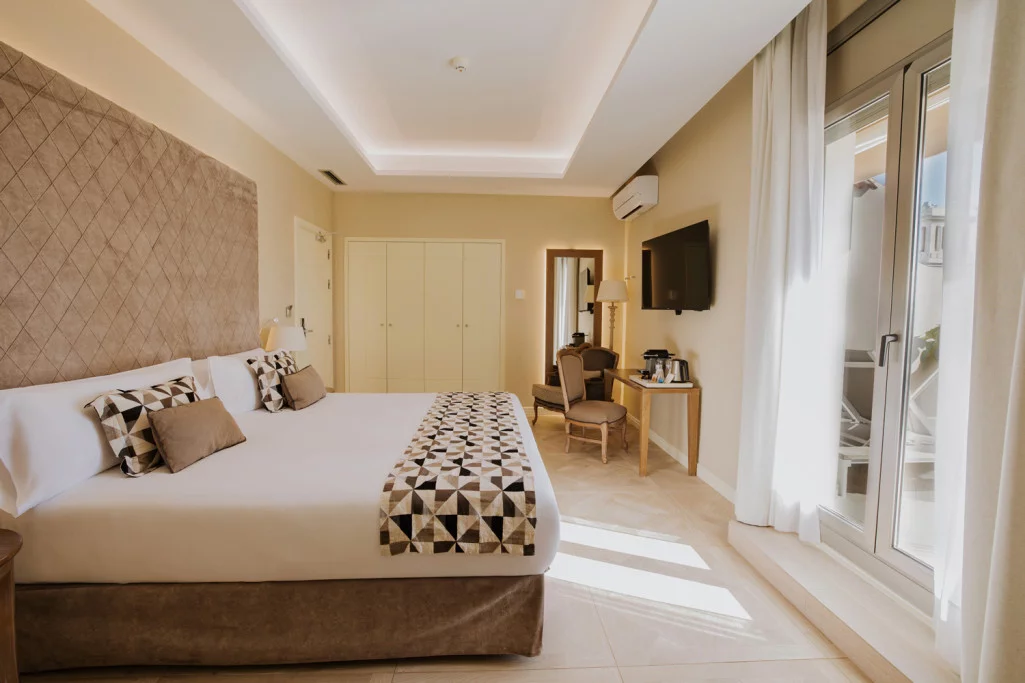
Skyline Penthouseは、**室内20㎡と広々とした専用テラス27㎡**を備え、1~2名様に最適な客室です。ホテル最上階に位置し、快適な室内空間と開放的な屋外スペースを兼ね備えたこのペントハウスは、落ち着いた環境の中でバルセロナの街をゆったりと楽しみたい方におすすめです。
グランドマスター スイート
4人のゲスト · 眺望 · バルコニー
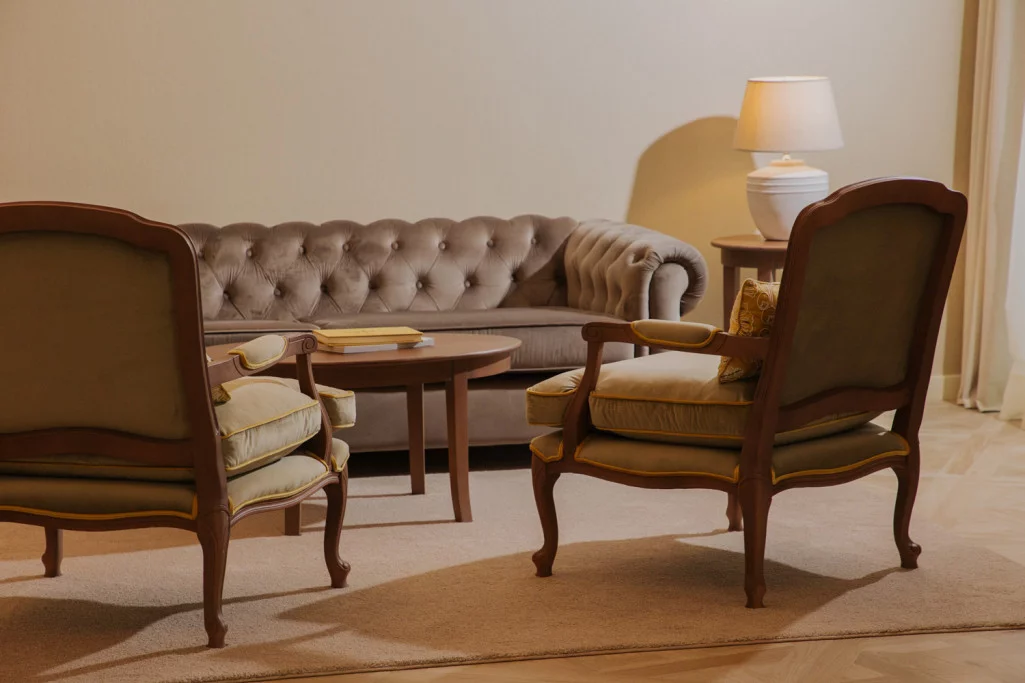
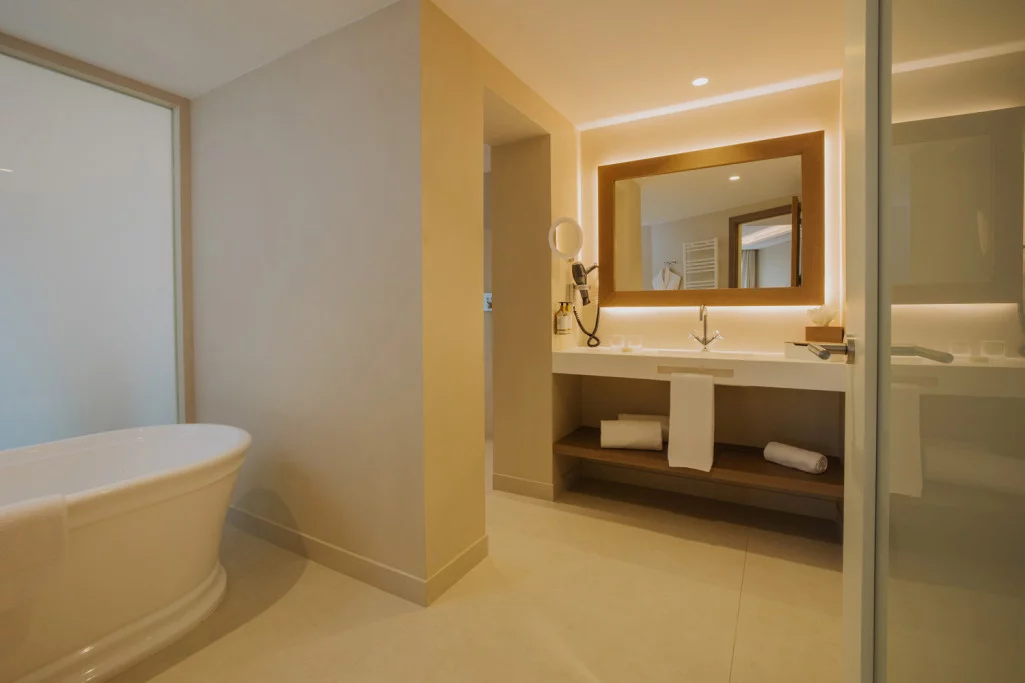
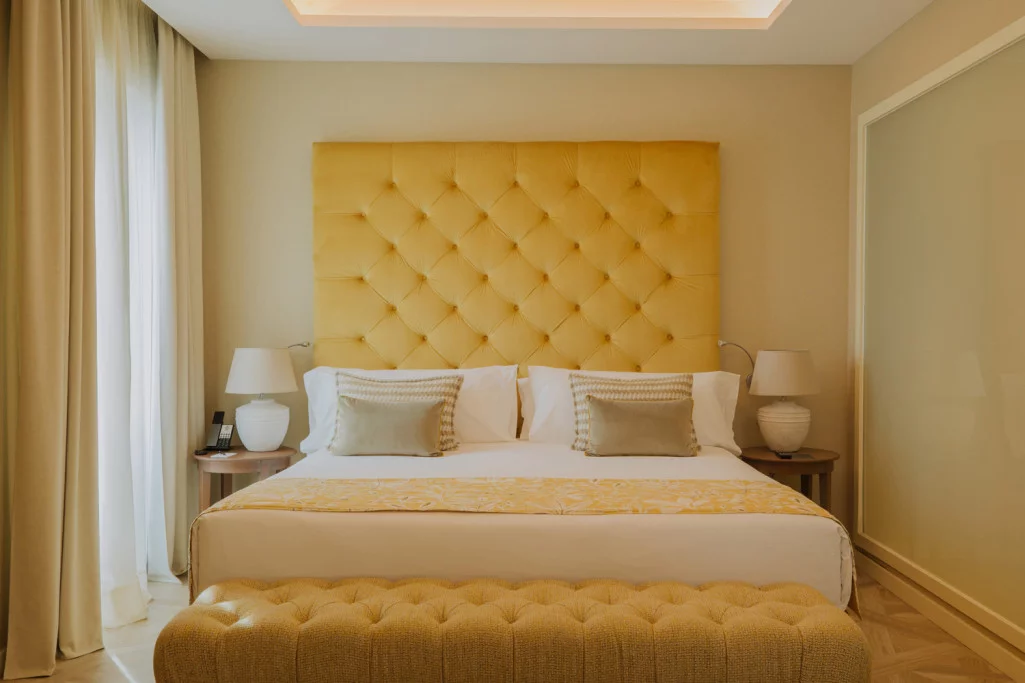
Grand Master Suiteは、Lamaro Hotelで最も広々とした特別なスイートです。72㎡の広さを誇り、**最大4名様(大人2名、17歳以下のお子様2名)**まで快適にご利用いただけるよう設計されており、ご家族でのご滞在やより広いスペースが必要な旅にエレガントで機能的な空間をご提供します。キングサイズベッド、シャワーとバスタブ付きのバスルーム、そして専用バルコニー2つを備え、バルセロナ大聖堂の眺めをお楽しみいただけるほか、自然光を取り入れ、街の歴史的な環境と直接つながる空間となっています。広さ、快適さ、そしてバルセロナ中心部という特別な立地を兼ね備えたスイートです。
**Design & Craftツアーは直接予約(当ホテルのウェブサイト、電話、またはメールでのご予約)に含まれています。**ゴシック地区の職人工房を巡る2.5~3時間のガイド付きツアーで、ルーフトップL'Àticからスタートします。1日1回、午前11時のみの開催で、空き状況および事前確認が必要です。ご希望の日程をご記入の上、事前にconcierge@lamarohotel.comまでご連絡いただくことをお勧めします。詳細情報